Brazil's influence over football is unmatched: from their world-record five World Cup triumphs, to the countless all-time great players like Pelé, Ronaldo Nazario and Neymar Jr. that they have produced and to their current domination over the Copa Libertadores, there's no place on the planet that hasn't been conquered by a Brazilian player or team.
Despite all this success over the last century, not much is known abroad on how their football league actually works, which is unfair given how important the country is for the sport, so let's take a dive into the Brazilian football league system to figure out how it all works.
First of all, we have to define the state leagues and the national leagues. Every year each club begins the season competing in their own state league, for example all the clubs from Rio de Janeiro compete in the Campeonato Carioca, the clubs from São Paulo compete in the Campeonato Paulista and so on.
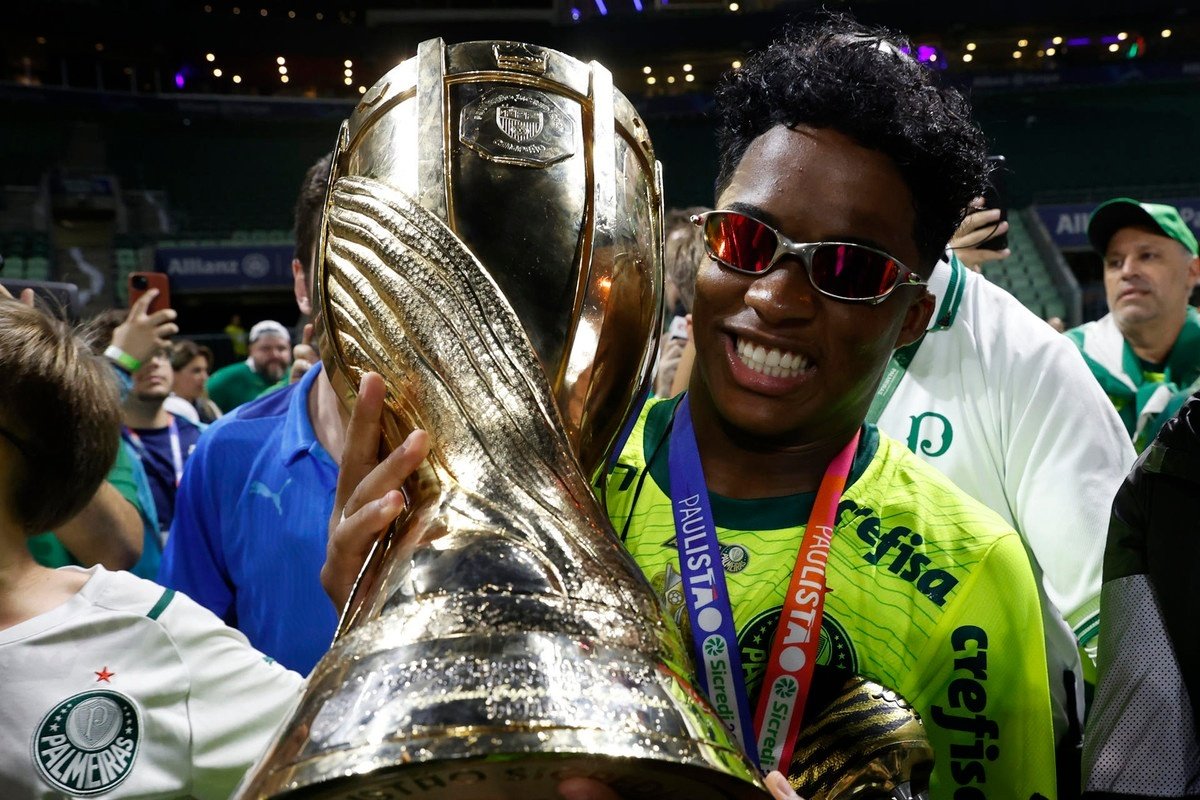 |
| Endrick celebrates Palmeiras' Campeonato Paulista title. From besoccer.com |
It may sound weird to European fans to imagine Barcelona starting their season in a Catalan championship alongside Espanyol, Girona and all other clubs from there, but the Brazilian state championships have a much longer tradition than national leagues: the oldest state championship, the Paulistão we've mentioned earlier, was created in 1902, and it wasn't until 1971 that a national championship wouldn't take place. It is important to remember that Brazil is massive, and traveling all over the country every few days wasn't feasible until improvements in the infrastructures happened.
The state championships
The Federative Republic of Brazil is composed of 26 states and the Federal District of Brasilia, which hosts the capital. Each of the states and the capital hold every year a football state championship, so a total of 27 different championships take place in parallel between clubs from each state.
_-_en_-_colored.svg/800px-Brazil%2C_administrative_divisions_(states)_-_en_-_colored.svg.png)
Brazil's states
Each league is organized by the respective state's football federation. Most leagues have more than one tier, meaning that a club could relegate or be promoted based on the results they achieve: the only two states that only have one tier are Acre and Roraima, while the Paulistão and the Campeonato Carioca have five different divisions!
The necessity to hold state championships made local rivalries much more intense, as every year the derbies could be crucial in the fight for the title. The biggest examples of these rivalries are Fla-Flu between Flamengo and Fluminense in the Carioca, the derbies between Santos, São Paulo, Corinthians and Palmeiras in the Paulistão and the Classico Mineiro between Atletico Mineiro and Cruzeiro. 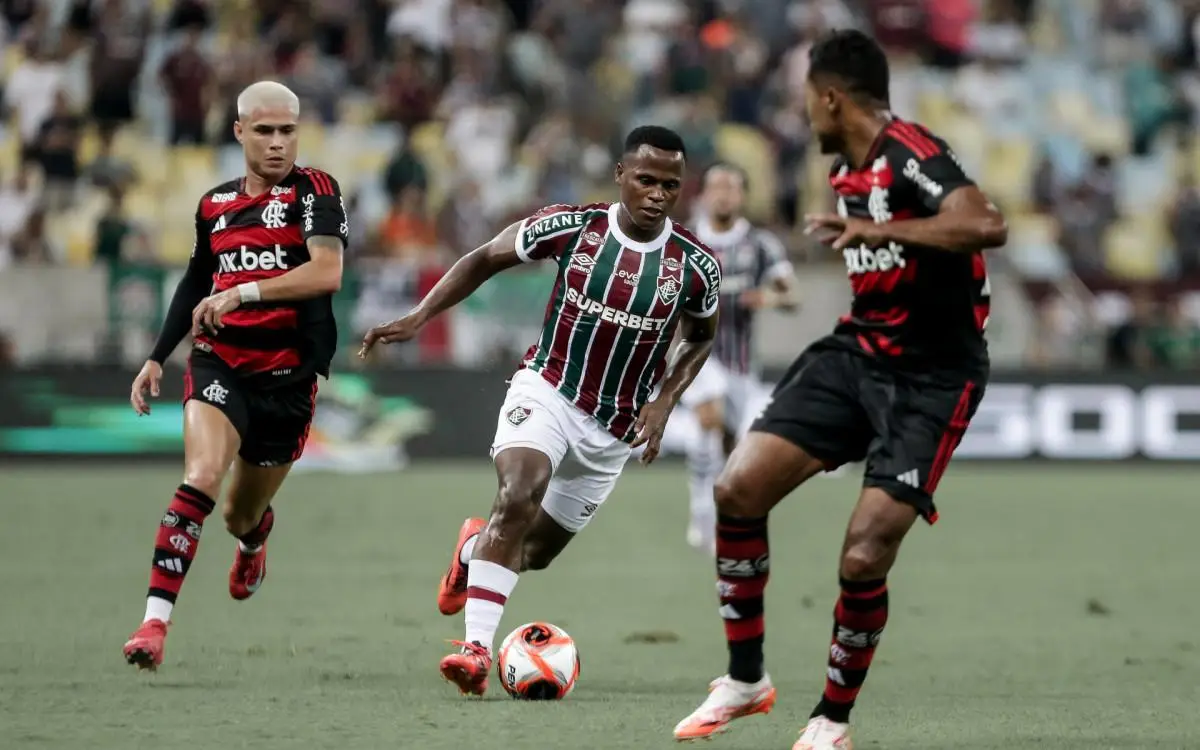
Flamengo and Fluminense. From mengomania.com
The state championships are also a way to qualify to the Copa do Brasil, the Brazilian equivalent of the FA Cup, where 92 clubs compete in a knockout tournament. The Brazilian cup is a trophy of great prestige and even awards greater prize money than the national league Brasileirão.
In addition, the clubs that don't already compete in the national leagues but rank the highest in the respective state championships can earn qualification to the nation wide Serie D, the fourth tier of league football in Brazil, which we'll see in depth later.
ABC Futebol Clube from the state of Rio Grande do Norte hold the record for the most state championships won, having conquered the Campeonato Potiguar an incredible 57 times, enough to boast the world record for most titles won in the same competition, more than Glasgow Rangers' 55 league titles in Scotland and Linfield's 54 in Northern Ireland. Bahia, Atletico Mineiro and Paysandu are joint-second in terms of Brazilian state championships with 50 each. 
ABC fans can brag about their world record. From diariopernambuco.com.br
The state championships are usually held between January and April. However, some states in the North Region play their championships in May or June due to the weather in the wet season.
The national leagues
The national pyramid is divided in four tiers, from Série A down to Série D. Twenty clubs compete in each of the first three, while Série D is contested by 64 teams.
Série A, more often referred to as the Brasileirão, is the top league in the country and, according to IFFHS and recent Copa Libertadores editions, the strongest league in South America. The first edition was held in 1971, and the tournament frequently changed format, to the point that 92 clubs participated in the 1979 edition. Earlier than 1971 different competitions have been played, which have been retroactively been counted as national championships. Since 2006 the format has been standardized, with a round-robin league stage played by 20 teams.
Palmeiras are the club with the most national championships, 12, with Santos following with 8 and Corinthians and Flamengo with 7 each. Current champions Botafogo are now on 3 league titles. 
Botafogo celebrate their 2024 title. From oantagonista.com.br
Famous relegations are not unheard of in the Brasileirão: Palmeiras, Internacional de Porto Alegre, Botafogo, Cruzeiro, Gremio, Santos and Vasco da Gama have all played in the second tier at least once since 2013. The clubs that have been in the top tier uninterruptedly the longest are Flamengo, since 1967, São Paulo, since 1980, and Fluminense, since 2000. 
Santos' players distraught following relegation in 2023. From folha.uol.com.br
The bottom four teams in the top division are relegated to Série B, where 2022 Copa Libertadores finalists Athletico Paranaense will be spending their 2025 season after a disastrous relegation last year. Along with them, Paysandu, Cuiabà, América Mineiro and Chapecoense will fight for promotion back into the top division.
Just like between Série A and Série B, the relegation-promotion mechanism between Série B and Série C also results in four clubs from each division going up or down the pyramid. This year's edition will be contested by Retrô, Guarani, Nautico and aforementioned ABC.
The bottom four from Série C, alongside 60 of the best ranked clubs from the state championships, compete in Série D. The competition is divided in eight groups of eight clubs each, based on geographical proximity in order to reduce costs of travel. The best four teams from each group qualify for the playoffs, a 32-team two-legged knockout tournament in which the four semifinalists earn promotion to the third tier.
Fixture congestion
Between state championships, national leagues, Copa do Brasil, state cups and continental competitions, Brazilian clubs often play over 70 matches in a calendar year. In 2022 Manchester United were the European club that had to play the most matches, with 62: five different brazilian clubs played more than that, with Palmeiras competing in 74 matches over the whole year!
The five teams that have played the most matches in a single season in football history are all from Brazil: Palmeiras played 92 matches in 2000, Gremio played 91 in 1995, Vitoria 90 in 2010, Gremio again 87 in 1994 and Vasco da Gama 87 in 2000.
The solution to this is having massive squads: Brazilian clubs often have more than 40 players to compete in all the different trophies and to avoid injuring the players.
In 1994 Grêmio had to play three matches from the Campeonato Gaucho in a single day: the played one at 2PM, one at 4PM and one at 6PM, using 34 different players from their first team, the reserves and the academy.
With tens of millions of Brazilians who live and breathe football it's no wonder that the country is so influential in the football world, and the countless matches and competitions that take place in the country are always a great opportunity do discover some local talent that one day might earn glory in the Copa Libertadores, in the National team or make the jump to Europe and compete with the best of the best.
Just be careful if you choose to follow a Brazilian club. It might turn into a full time job!
Enumerating Brazilian derbies without mentioning Gre-Nal (Grêmio vs Internacional) is ridiculous. It is often cited as one of the biggest rivalries in the world. Two world championships and five Libertadores make it the biggest derby of Brazil.
ReplyDelete