Athletic notoriously only signs Basque players, but the rule is not as straightforward as it seems.
Football fans probably know a lot more about the Basque Country than the average person, and that is in large part thanks to Athletic Club's everlasting presence in La Liga and the UEFA competitions. In the 2025-26 season they are also back in the UEFA Champions League.
However, the link between Athletic and their region is not limited to the fact that they are from there. The ties between the club and the Basque people are much, much stronger than that of your average football club.
Athletic has, over the decades, grown into being somewhat of a National Team for the Basque Country. Many more successful clubs share the same background, like Real Sociedad and Osasuna, but none of them have achieved the same (extreme) level of Basque-ness as Athletic.
This idealisation of Athletic Club as the peak of Basque pride in sports is mainly due to the club's self-imposed transfer policy, which greatly limits the available talent that the team can use to strengthen the squad.
 |
| Athletic Club's players pose before a match |
What is exactly Athletic's transfer policy?
Athletic Club will only sign players born in the Basque Country or players who have come through a Basque club's academy. This is technically an unwritten rule: Athletic could override it at any time, but at this point it is so ingrained in the identity of the club that not respecting it anymore would be considered heretic.
However, in 2008 the club's official website stated that "our sporting philosophy is governed by the principle that players who have been developed in our own academy and those trained in clubs in Euskal Herria (the Basque Country), which includes Bizkaia, Gipuzkoa, Araba, Nafarroa, Lapurdi, Zuberoa and Nafarroa Behera, as well as players who were born in any of them, can play in our ranks". So, despite it not being a law that would put you before a judge if breached, it's kind of official even if it's not.
The club has occasionally invited youth players who had Basque ancestry to join the academy, but senior players will not be signed on heritage alone.
This policy, which has often received praise because it helps grow local talent and preserve the Basque heritage of the club, has also been accused of being discriminatory against non-Basque players.
In addition to that, Bilbao isn't a popular immigration hub, so Athletic were the last La Liga club to field a black player, doing so the first time in 2011 when Jonas Ramalho (born in the Basque Country from an Angolan father) made his debut.
Nowadays, Athletic's most famous players are both black: we are talking about the famous Williams brothers, Iñaki and Nico, who were born in Bilbao to Ghanaian parents. Iñaki, who is now the captain of the club, is closing in on 500 appearances for the side, while Nico, who was crucial in Spain's Euro2024 win, rejected Barcelona's interest to stay at his boyhood club.
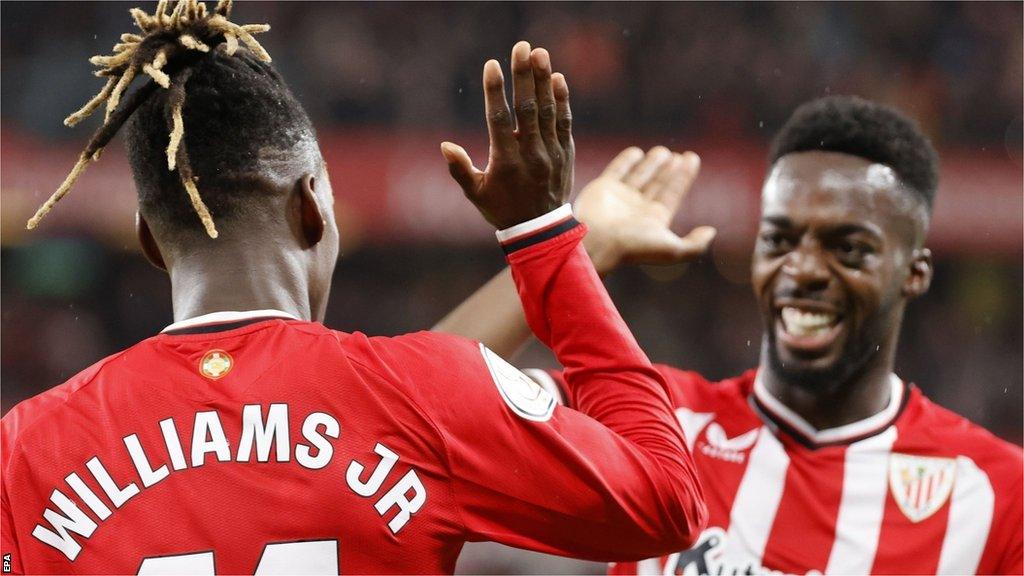 |
| Nico and Iñaki Williams high five eachother [ph: BBC] |
It is not uncommon for the club to sign French players as well: part of the Basque Country is located in France. Lizarazu became the first Frenchman to play for Athletic in 1996, and Aymeric Laporte was the first to graduate from the academy in 2012. The latter was controversial, as he was not born in the Basque Country and was invited to join because of his great-grandparents' Basque heritage. Since 2021 he's represented the Spanish National team.
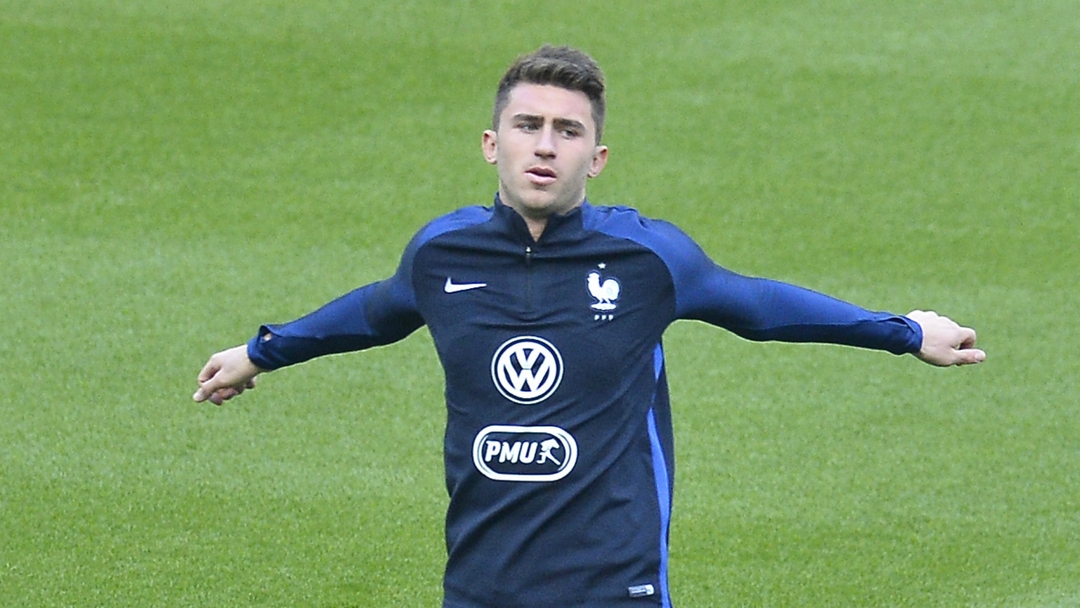 |
| Aymeric Laporte represented France in the youth National teams before switching to Spain [ph: beIN sports] |
Why did Athletic start signing Basque players only?
At the beginning of its history Athletic did field some foreign players, most of which were English. This caused a dispute in the 1911 Copa del Rey clash against Real Sociedad, who claimed that the English players used by Athletic were ineligible.
Due to this controversy, the Spanish FA introduced a rule stating that from the next year on all players should have been Spanish citizens. This rule was actually not a problem for the Basque clubs: most of the Spanish players at the time came from the Basque Country, so they could rely on local talent without struggling that much.
Some years later the rule was lifted, but both Athletic and Real Sociedad decided to keep the local signing policy, with both clubs fielding Basque players only. It wasn't until 1989, when Real Sociedad signed Irish striker John Aldridge, that the club from San Sebastian lifted the self-imposed restriction, while Athletic's one still holds on today.
 |
| Athletic Club's side in the 1980s, composed of only Basque players |
Athletic's success despite the signing policy
This policy should technically harm the competitiveness of Athletic Club, but its history proves otherwise: they are the fourth most successful club in La Liga history with 8 titles, and they have won the Copa del Rey 24 times!
They have had a golden age in the 1930s, when they won five titles in just over a decade, and in the 1980s when they won the last two titles consecutively. The most recent trophy is however the 2024 Copa del Rey, won against Mallorca after defeating Barcelona and Atletico Madrid.
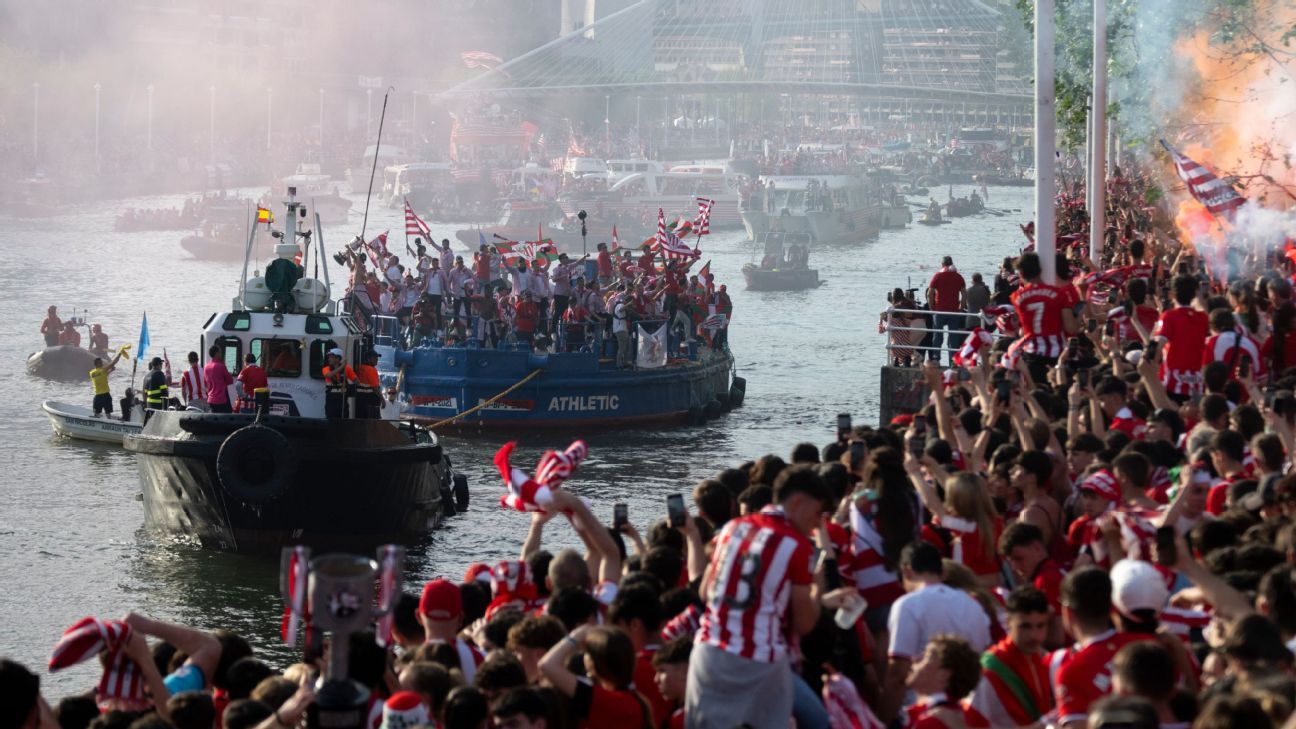 |
| In 2024 Bilbao had their Copa del Rey trophy parade on a boat! [ph: ESPN] |
In addition to the frankly astonishing amount of success they've had, Athletic is one of the three founding members of the league to have never been relegated, along with Barcelona and Real Madrid. These three clubs plus Osasuna are the only professional clubs in Spain owned and operated by their club members, kind of like the German clubs.
Athletic's fortunes have been built on a state of the art training facility where all the youth teams train as well as the first team, showing how investment in the academy can prove crucial in the long term. Such investments also turned profits in the transfer market: Athletic has made serious money selling Kepa Arrizabalaga, Aymeric Laporte, Javi Martinez and Ander Herrera abroad, and has a lot more talent coming through the pipeline. That is, if they ever want to leave.
Fun fact: Atlético de Madrid was founded as Athletic Club Sucursal de Madrid by Athletic fans in the capital, and that's why both clubs play in white and red stripes. Atlético fans then founded Atlético Tetouan in Morocco, giving it Athletic Club's badge and colours. It's a little bit confusing but it all started in Bilbao!
Another fun fact: La Liga's top scorer is called Pichichi. Pichichi was the nickname of Rafael Moreno Aranzadi, a striker born in Bilbao in 1892 that helped the club win four Copa del Rey trophies. He passed away young and the club built a statue for him. Hungarian players from MTK Budapest laid a bouquet of flowers next to the statue, and that became a tradition for any side visiting San Mamés for the first time.
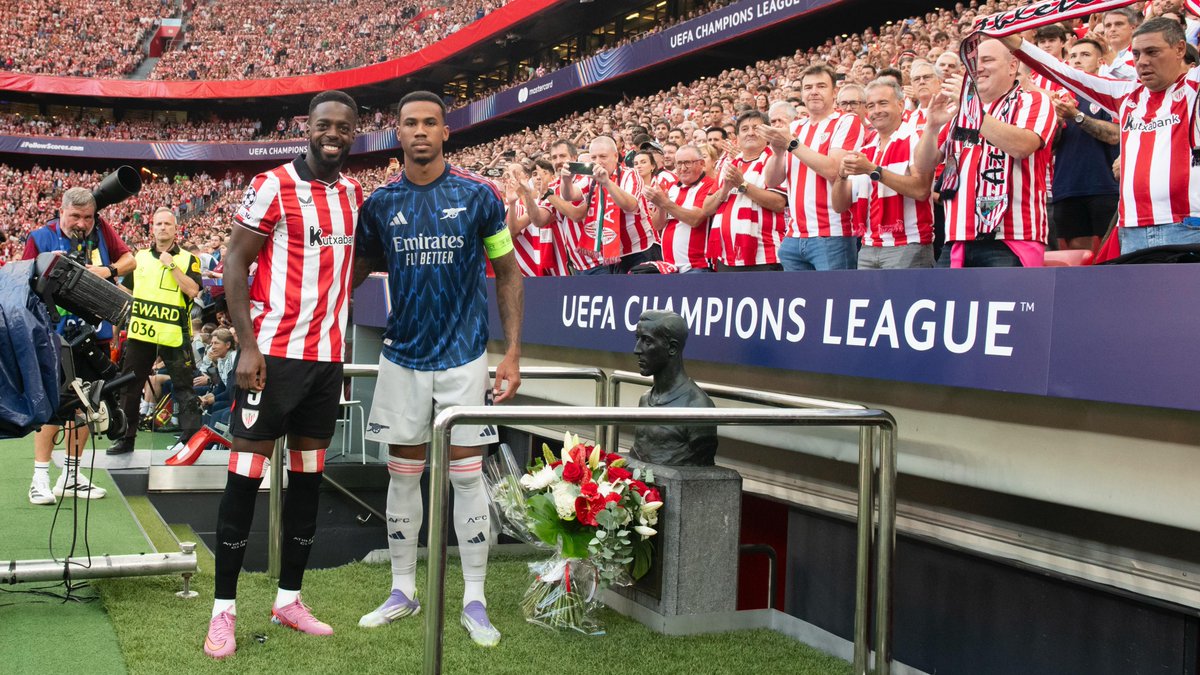 |
| Gabriel and Iñaki Williams pose for a picture after Arsenal's captain laid a bouquet on Pichichi's statue |
Comments
Post a Comment