Amed Sportif Faaliyetler Kulübü, most commonly known as just Amedspor, is an institution for the Kurdish communities that populate Turkey's southeastern regions. They are based in Diyarbakır, the largest Kurdish city in the country, which is home to almost two million people in its metropolitan area, 72% of which speak Kurdish on a daily basis.
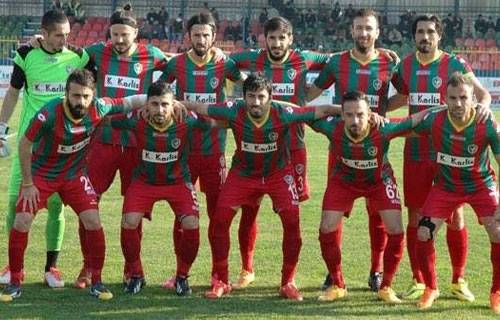
Amedspor players [infoaut.org]
The Kurds are the biggest ethnic minority present in Turkey, as they make up around 15-20% of the country's total population and are mostly concentrated in the region called Turkish Kurdistan.
To truly understand the tensions between the Kurds and the Turkish, we just have to point out how the Republic of Turkey once had an official policy to deny the existence of the Kurd ethnicity, rather calling them Mountain Turks. The words "Kurds" and "Kurdistan" were banned, and the language was prohibited after the military coup of 1980, although nowadays it is taught as a subject in some schools.
Kurdish movements, through both peaceful activities and armed rebellions, have for decades asked for the right of self-determination for the Kurd people. Over time, multiple conflicts erupted between Turkey and the Kurd people, even resulting in food embargoes, arrests and the destruction of entire villages. To this day, the tensions are still high, and the conflict is represented on the football pitch any time Amed SK face a nationalist fanbase.
The name
The club, which is named after Diyarbakır's historical name (Amed), was originally founded in 1972 as Melikahmet Turanspor, named after the main sponsor Turan Gazozlar. During the decades, the team underwent multiple rebrandings, first dropping the sponsor's name in 1985 when the deal ended, then being renamed after the city in 1990 when the municipality bought the club.
As Diyarbakır Belediyespor (literally Diyarbakır Municipality Sports Club) the club earned its first ever promotion to professional football in 1994, entering the fourth tier and remaining there until 2013, when it gained yet another historical promotion to the third tier.
It was in 2014 that the current denomination was approved: originally, the idea was to name the team Amedspor, but the Turkish FA rejected the name because apparently another club was named the same, so the Kurds had to settle for Amed Sportif Faaliyetler Kulübü, which was approved and still is the club's official denomination to this day.
Identity
Amedspor openly embraces its Kurdish identity: according to former club president İhsan Avcı, the club viewed itself almost as a National team for Kurdistan, with the majority of the squad composed of Kurdish players. To some extent, its relationship with the community is similar to that of FC Barcelona and Catalonia or Athletic Club and the Basque Country.

Amedspor fans display the Kurdish flag [turkishminute.com]
Apart from the ethnic identity of its fanbase, the club also embraces other historically discriminated groups, promoting women's participation at all levels and welcoming LGBT, black and Armenian people with open arms.
The main supporter group, called Amedspor Barikat (literally "barricade"), is openly anti-fascist, anti-recist, anti-sexist and patriotic towards Kurdistan: in fact, they are known for singing multiple pro-Kurdish chants week after week, for which they have also received fines over the years. The women supporting the club have gathered under the name Mor Barikat ("purple barricade"): both fan groups support women's equality, a practice more popular among Kurds than in neighbouring societies.
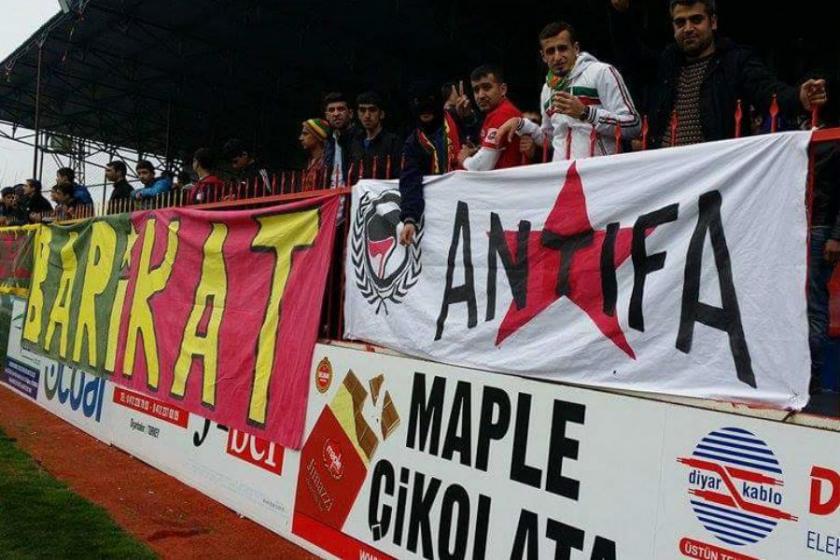
The Barikat banner appearing next to an Antifa one [evrensel.net]
With the recent rise through the Turkish football pyramid, which saw Amedspor promoted to the 2nd tier (the TFF 1. League), club president Aziz Elaldı commented positively on the level of support the team is gaining between people of the younger generations. According to his remarks, Kurdish children in Turkey are nowadays more and more likely to support Amedspor rather than the traditional Istanbul giants like Galatasaray and Fenerbahce.
Controversies and repression
Given how tense the relationship between Turkish and Kurdish people is, there's not surprises in finding out of the numerous incidents which have involved Amed and its fans over the years. Ever since the name change in 2014, the situation has worsened, as the club was seen by the Federation as a symbol of Kurdish nationalism.
The display of Kurdistan's flag was eventually banned inside of the stadiums, but prohibitions didn't stop there: Amedspor's merchandise has regularly been seized by the police, banners written in Kurdish language have been banned and some Amed fans have even been arrested for not standing during the Turkish national anthem. From 2016 to 2020, supporters were banned from attending 70 away matches.
In 2016 Amedspor upset Bursaspor in the Turkish cup, and the fans were banned from attending the quarter-final against Fenerbahce on grounds of "ideological propaganda": they had reportedly made chants about the Turkish military operations going on in Kurdish cities at the time, singing "everywhere is resistance" and "children should not die, they should come to our matches".
Midfielder Deniz Naki received a 12 game ban for dedicating a victory to the victims of the oppression perpetrated on the Kurdish people, which eventually became a lifetime ban when a court added terrorism-related charges. Naki was found guilty of speaking up against the Turkish invasion of Kurdish-majority Afrin district in Syria, as well as participating in demonstrations against it.
.jpg)
Deniz Naki has been detained in a German prison until 2023 [bianet.org]
When Amedspor and Bursaspor met again in 2022, the clash continued. Amedspor reached Bursa's stadium in armed vehicles, and the home fans gathered outside the hotel where Amedspor was staying to sing Turkish nationalist chants and set off fireworks. On matchday, fights broke out inside the stadium involving both sets of fans, and eventually the pitch was invaded. On the reverse fixture, Bursaspor fans displayed banners to celebrate the political killings and disappearances of Kurds in the 90s, for which they received a six-match ban.

Matches between Bursaspor and Amedspor are a very tense affair [turkiyegazetesi.com.tr]
Just a few months ago, Amedspor featured a slogan on its kits, saying "Our group is for you" in Kurdish. The club was fined twice on grounds of breaching equipment regulations, despite claims that the slogan, which was part of a sponsorship campaign, had already been approved by the federation before it appeared on the jerseys. The management accused the federation of being discriminatory against the Kurds, because apparently the same slogan had appeared in Turkish on other clubs' kits before without resulting in fines.
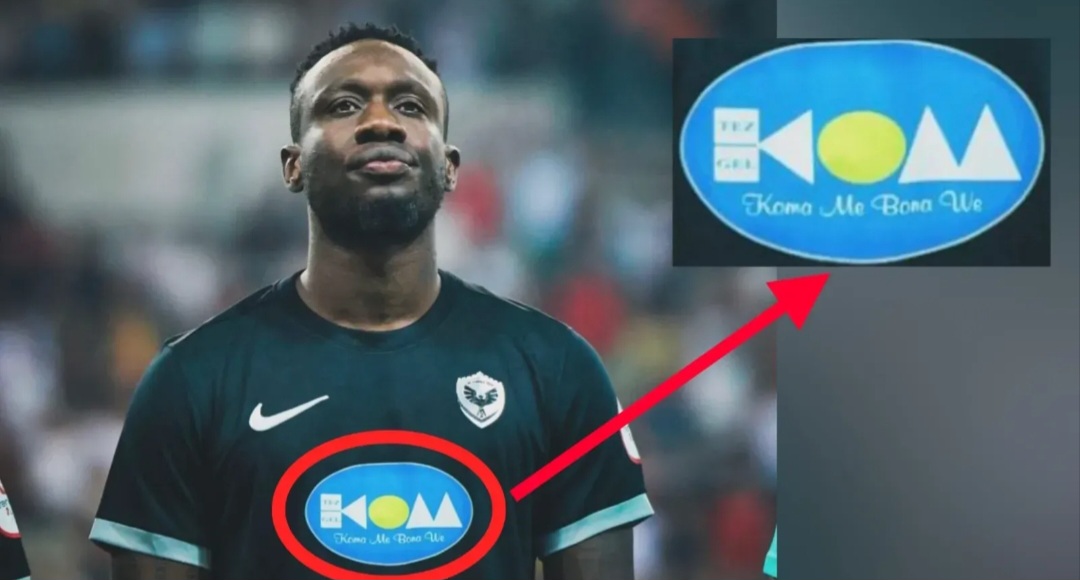
The sponsorship which caused the controversy [kosart.tv]
Last, but not least, the latest controversy involved a video published by the club's social media team depicting a woman having her hair braided. This is a symbol of solidarity for the Kurds in Syria, whose armed forces (the Syrian Democratic Forces, SDF) have recently been attacked by the forces of the Syrian transitional government, supported by Turkey. Eventually the fighting resulted in a ceasefire, but the club was fined for "damaging the reputation of football by making ideological propaganda", the same charge used a decade ago to ban Amedspor fans.
To this day, tensions are high, and for the Kurds of Turkey Amedspor represents a symbol of unity and strength, fending off attempts to delete their heritage.
Comments
Post a Comment