St. Albans City FC are a semi-pro club from Hertfordshire that currently compete in the National League South, the sixth tier of English football. They play their home matches at Clarence Park, a Victorian park given to the citizens of St Albans by Sir John Blundell Maple in 1894. The park is famous for its variety of trees and planting that has hosted the club's football ground since its foundation in 1908, and before that St Albans FC's home matches, the original football club, until 1904.
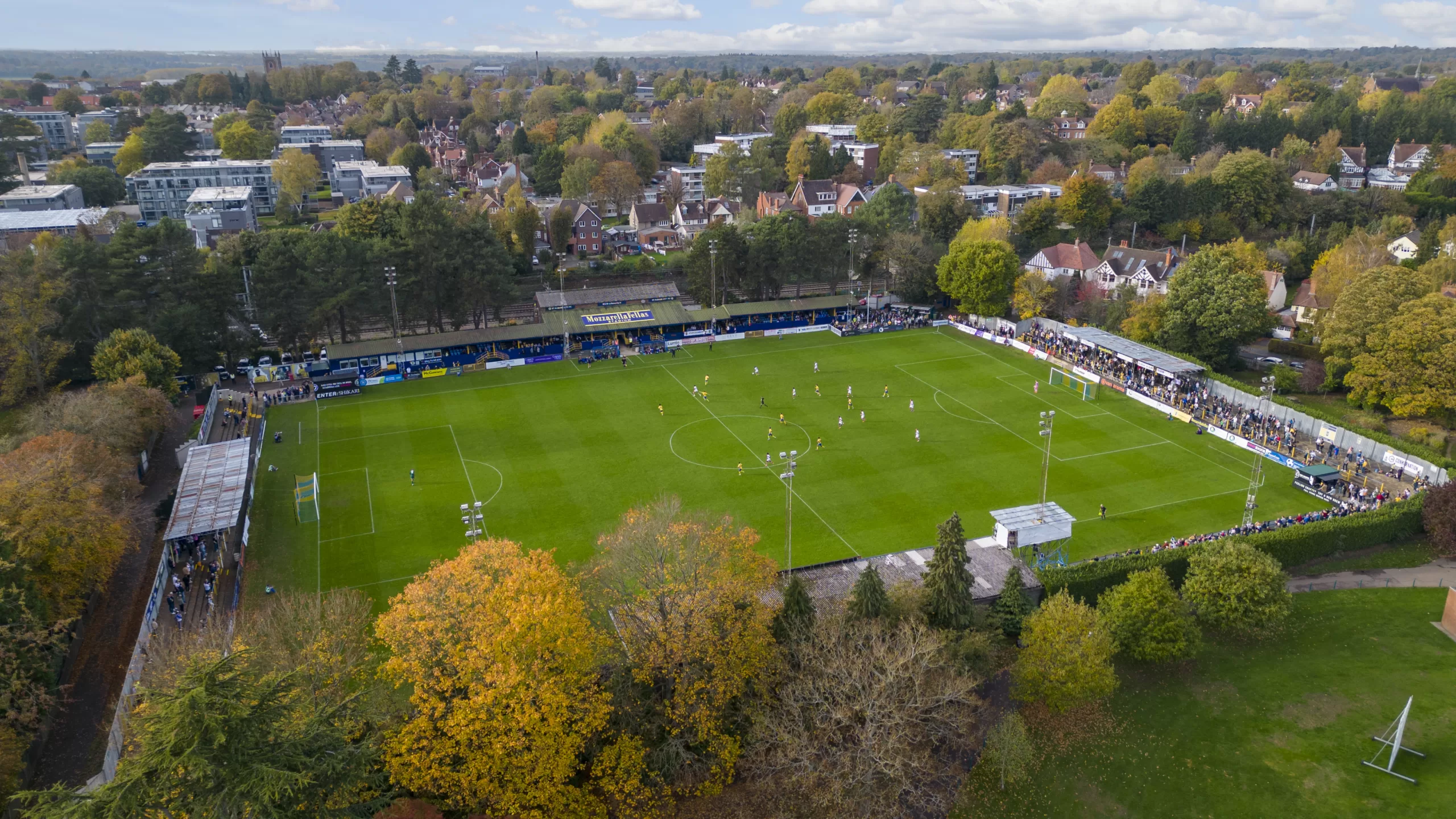 |
| Clarence Park, home of St Albans City FC. From stalbanscityfc.com |
St Albans have, in their history, always played in the lower divisions of English football, playing in the Spartan League and the Herts County League in the early years, then moving to the Athenian League and finally to the Isthmian League for the better part of the 20th century. It was in the 1992-93 season that the club finally had the chance to move up the football pyramid and out of the Isthmian League, when finished second only behind Chesham United, a position good enough to gain promotion to the Conference when the Generals declined the move up to the division because of their ground failing to meet the necessary criteria.
Clarence Park, however, had a peculiar feature: a 140 year old oak tree sat in the middle of the terrace behind one of the goals, and hanging over the playing field. It is unknown why the tree wasn't cut down when the pitch was made in the 1800's. The first mention of the oak came in 1894, when the original St Albans FC played a friendly at the park: the match report stated that the away side had managed to hit the tree with a poorly directed shot.
In the early 1900's the ground had no terracing: the first stand wasn't built until 1921, and once again the oak survived the new construction, with the stand built around it. At this point the tree had basically become an active part of St Albans' home matches: it was not uncommon for young fans to throw acorns in an attempt to annoy or distract the opposing goalkeepers when the away side had to defend that half of the pitch.
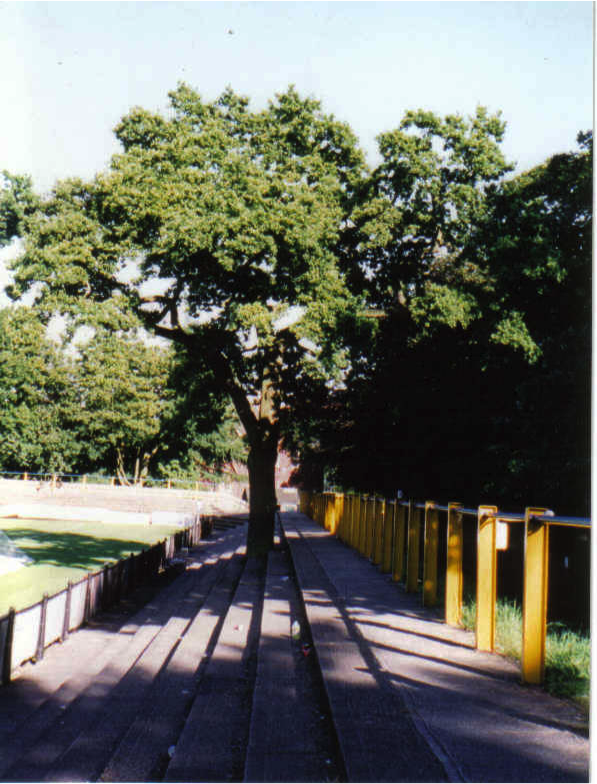 |
| The famous 140 year old oak. From saintsstatistics.co.uk |
Despite the oak being an incredible sight on Clarence Park's terraces, its presence posed a threat to St Albans' promotion hopes because of the strict ground rules that Conference clubs had to respect to be allowed into the division. A representative of the Conference stated that "St Albans have a beautiful ground, and it would be a shame to have to turn it into a normal stadium", yet the league denied their promotion for a multitude of reasons, one of which was the historic tree that made the stands so unique. In fairness, the Conference inspectors also called for major improvements in terms of medical facilities and turnstiles, without at first specifying that the tree needed to be cut down, but then changed their minds and asked for the old oak to be gone in order to grant St Albans promotion.
Even if the club was willing to remove the tree though, they couldn't: since the ground is part of a public park, the vegetation within the park have to be protected. A Tree Preservation Order was put in place just after St Albans were denied promotion, effectively forcing the club to keep the tree in the middle of the stands regardless of the rules of the leagues or the will to remove it.
The famous oak was finally cut down in 1998, as it was discovered that it was deseased with brown rot. Some supporters got part of it as souvenirs, while the trunk still lies in the recreational area of Clarence Park. After more than a century, the tree was gone, and with it a little bit of history of St Albans' home ground.
The old oak being cut down in 1998. From saintsstatistics.co.uk
St Albans now compete in the National League South, in the sixth tier of the English football pyramid, where they currently sit in the relegation spots and are trying to avoid being relegated back to the Isthmian League. The Saints even managed to earn a spot in the promotion playoffs in 2023, but the dream of playing 5th tier football vanished in the final against Oxford City.
Comments
Post a Comment