Most nations in the world have a top division filled with historic clubs with a glorious past which have won most of the domestic trophies in the country's history, it feels almost natural to have them at the top and everyone else fighting to just stay in the league. England's bix six are the most common example, but the same can be said for the Italian strisciate (the "striped teams", AC Milan, Inter Milan and Juventus) and for Spain's big three, although Atletico's success is more recent than Barcelona and Real Madrid's perennial quest for trophies. This natural almost gravitational-like attraction between the top teams and the top of the table sometimes feels inevitable, to the point that even clubs like Sampdoria and Valencia, who have had a glorious past reaching the Champions League final, will cause a massive shock relegating to Serie B or the Segunda, although at the time I'm writing this post Valencia are only 4 points away from safety.
There's a country though where this pull to the top seems to only work for Bayern Munich. Germany is absolutely filled with massive clubs and an incredible passion for football: in fact, the Bundesliga is the highest-attended football league in the world, with empty seats hard to find in any given match. However, many of these huge clubs have ran into mismanagement so much so that a lot of them now play in the second division, the 2. Bundesliga, which is without a doubt the biggest second division in the world in terms of club successes. The most overwhelming evidence of this is the fact that 11 out of the 18 clubs competing in the 2. Liga have been German champions in the past! This number is so astonishing that it has to be put in perspective to be fully appreciated: only 9 of the 18 clubs competing in the Bundesliga this season have been German champions at least once, with the latest addition being Bayer Leverkusen last year. This means that there's more league-winning clubs in the second division than in the first, something that probably has never happened in the main European leagues in the past.
What makes the 2. Liga special though, apart from the crazy amount of former champions participating, is the insane following it attracts: while the Bundesliga is clear in first place, the 2. Liga is the fifth most attendend league in world football. The average attendance is 29'000, an amount bigger than Ligue 1 and just a bit lower than LaLiga and Serie A. Let's take a look at the clubs that, despite their will to leave the second tier, are contributing to the crazy magic that is the Zweite Bundesliga.
Hamburger SV
HSV are the second oldest club in Germany, behind only Munich 1860. They play in the 57'000 seater Volksparkstadion, which famously had a clock showing the exact amount of years, days, hours, minutes and seconds that had seen HSV in the Bundesliga consecutively. The clock has been removed after their relegation in 2017-18.
 |
| From 24hamburg.de |
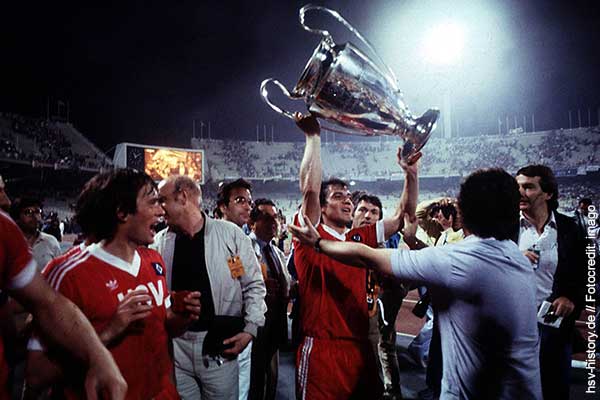
HSV's trophy cabinet is one of the most impressive in German football: the Hamburg side has won the league six times, the cup three times and the league cup twice, but the club's most historic triumph will forever be the European Cup won in 1983 against Juventus in Athens.
 |
| From HSV-history.de |
Schalke 04
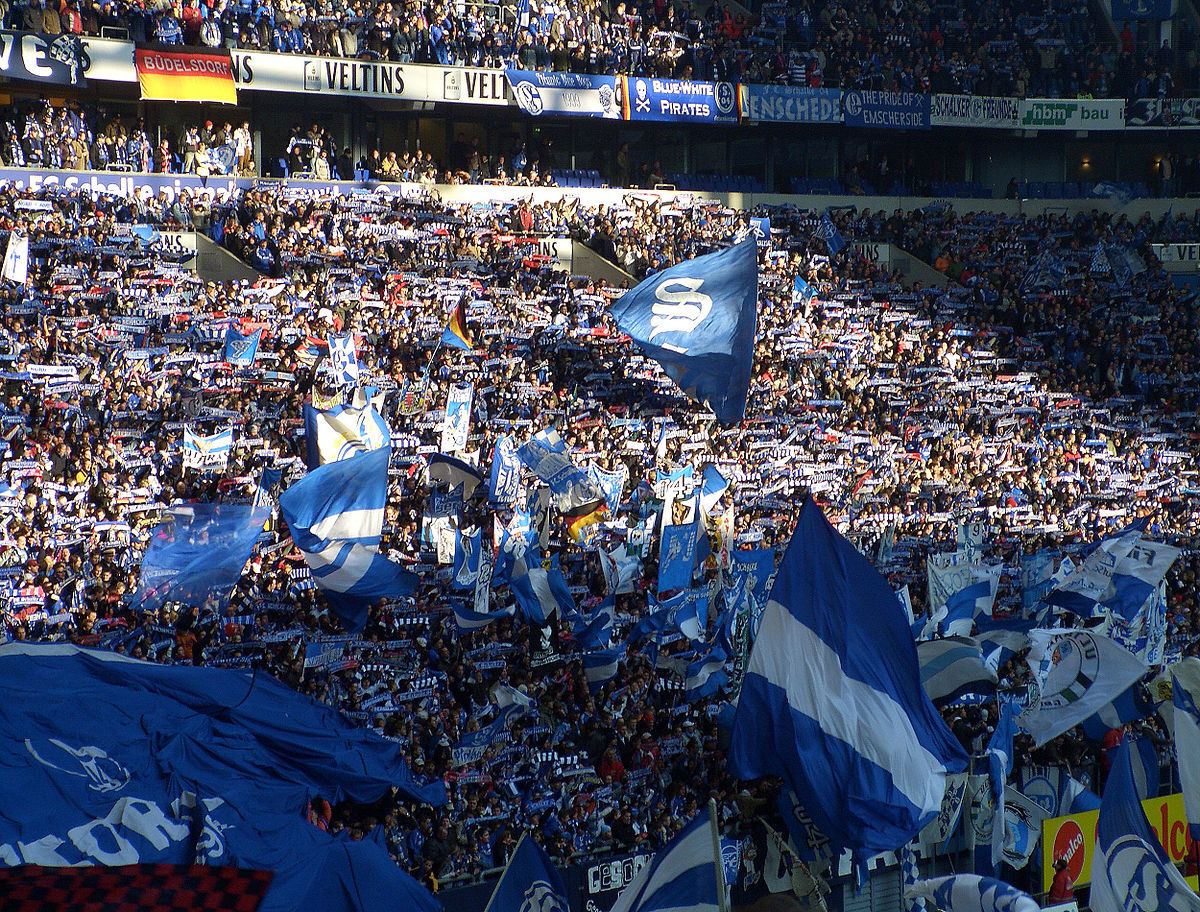
As of 2023, Schalke has 178'000 members, making it the third biggest club in Germany behind Bayern Munich and Borussia Dortmund. Their home ground is the Veltins Arena, which regularly hosts more than 60'000 spectators despite the team's questionable success in recent years. Nicknamed Die Knappen, an old German word for "miners", the team represented the coal miners from Gelsenkirchen in its early years. Seven times champions of Germany, the blue-whites dominated in the 1930's, then adding five cups, one league cup, one supercup and one UEFA Cup in 1997. The club's best result in the Champions League came in the 2010-11 campaign, when Raul led S04 to the semis after destroying Inter Milan 2-5 at the San Siro.
Hertha BSC
Founded in 1892, Hertha was one of the founders in the German FA in 1900. The Berlin club won two titles, in 1930 and 1931. Since 1963 their home ground is the world famous Olympiastadion, which hosts more than 74'000 spectators.
The unusual name of the club comes from a steamship: one of the founders, Fritz Lindner, had been on the ship named Hertha with his father, so when the club needed a name and colours he proposed Hertha and the colours of the ship's chimney, which were blue, white and yellow, which eventually disappeared, making blue and white Hertha BSC's colours ever since.

Fortuna Düsseldorf
Founded in 1895, Fortuna won a league title in 1933 and two cups in 1979 and 1980. In terms of European football, their biggest success was reaching the final of the Cup Winners' Cup in 1979 after getting past Universitatea Craiova, Aberdeen, Servette and Banik Ostrava.
They play in the Merkur-Spiel Arena, a 54'000 seater. In recent years Fortuna have started a project called Fortuna For All, an idea that allowed fans to access the stadium without having to pay the ticket on some selected matchdays. On the first match of this campaigned over 120'000 fans requested tickets for the game against rivals Kaiserslautern, and the lucky fans that managed to get those tickets witnessed an incredible 4-3 comeback win!
1. FC Nürnberg
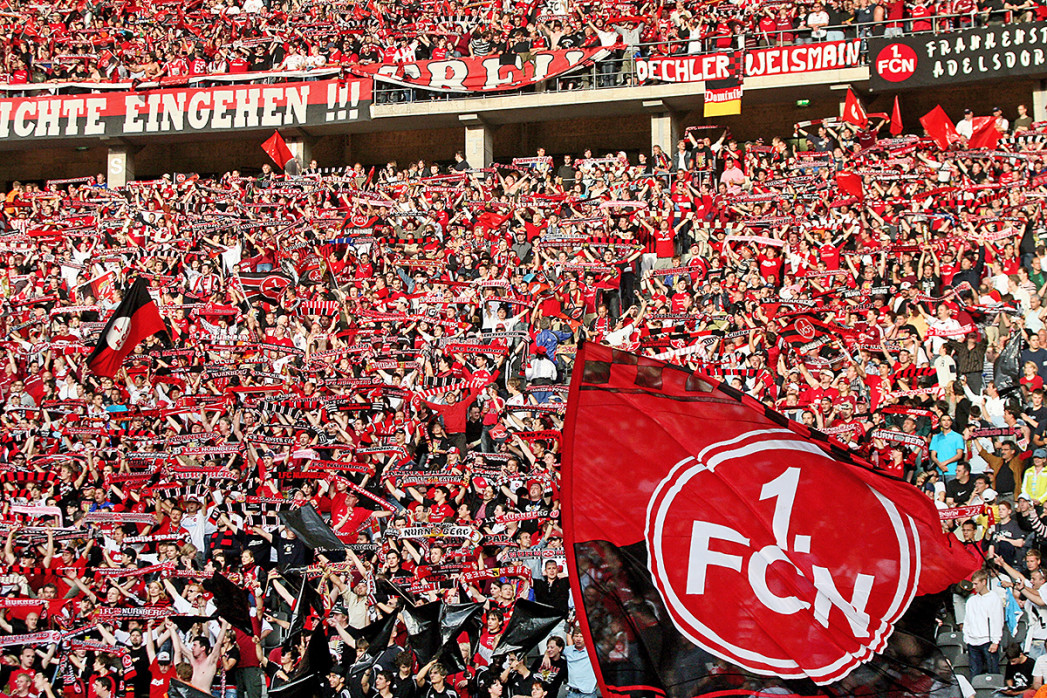
The Bavaria-based side is the second most decorated club in German football, having been German champions nine times, and had the most league title in the country before the founding of the Bundesliga in 1963. They won their last league title in 1968 and suffered the first relegation in their history exactly one year later, a fall from grace caused by a sell-out of their best players and frictions between the manager and the squad.
Apart from the numerous league titles, Nuremberg won four DFB-Pokal and reached the European Cup quarter-finals in 1962, only losing to eventual champions Benfica.
1. FC Köln
Formed in 1948 after a merger of two local clubs, they are three-times national champions, and won the league 1962, 1964 and 1978, and won four DFB-Pokals. Their best European campaign came in 1986, when they reached the UEFA Cup final beating Sporting de Gijon, Bohemians, Hammarby, Sporting Lisbon and KSV Waregem but losing to giants Real Madrid.
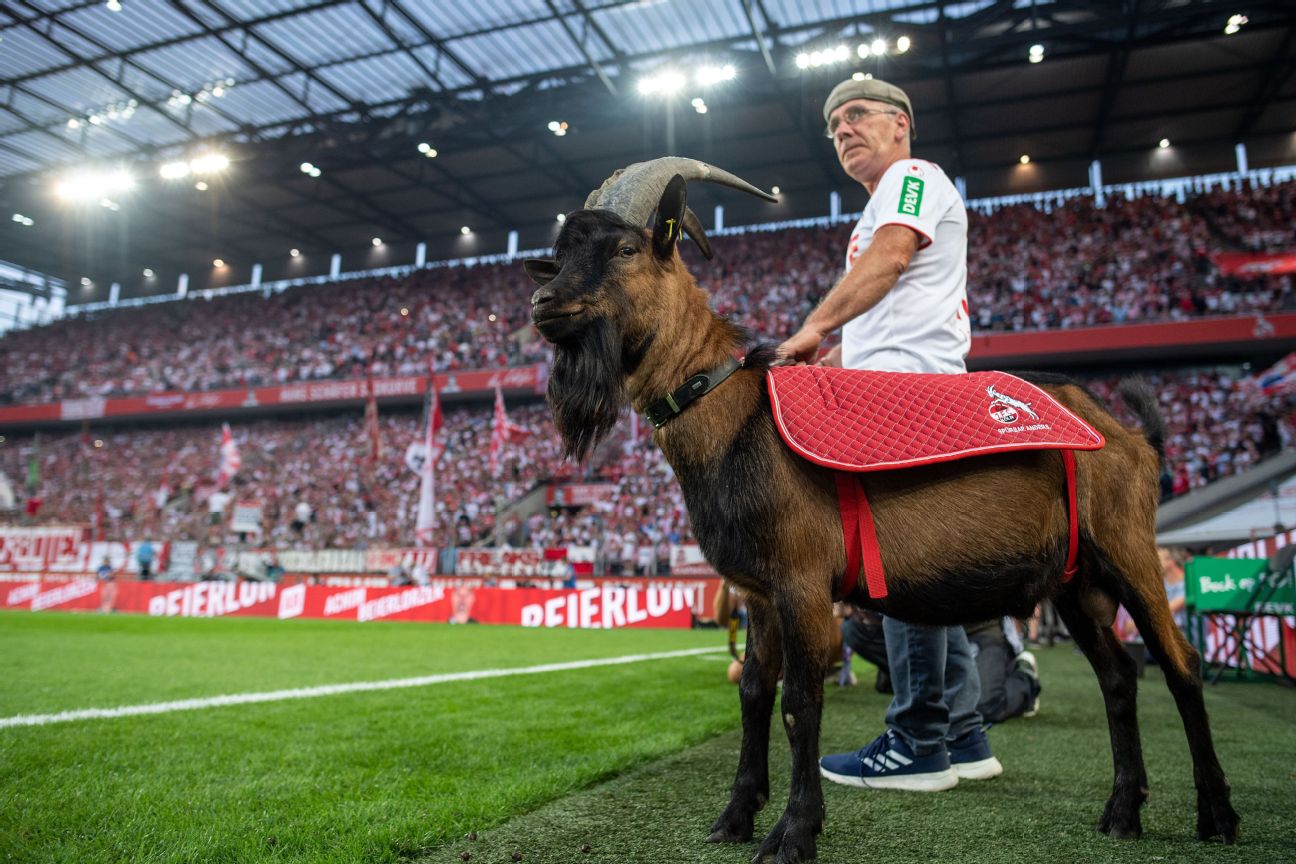
They are nicknamed Die Geißböcke, the "Billy Goats", which is a reference to the club's mascot, which is also part of the club badge. The goat became a symbol of the club when a circus entrepreneur gifted them a real goat as a joke, which was then named Hennes after player and manager Hennes Weisweiler. The current mascot is Hennes IX.
 |
| From espn.com |
1. FC Kaiserslautern
Kaiserslautern were a founding member of the Bundesliga in 1963, and remained in the top division until 1996. They are one of the most decorated clubs in the country, winning four league titles, two cups and one supercup. They came close to cup glory in 2024, reaching the final in Berlin but eventually losing to the invincible Bayer Leverkusen team that dominated the Bundesliga and almost won the Europa League too.
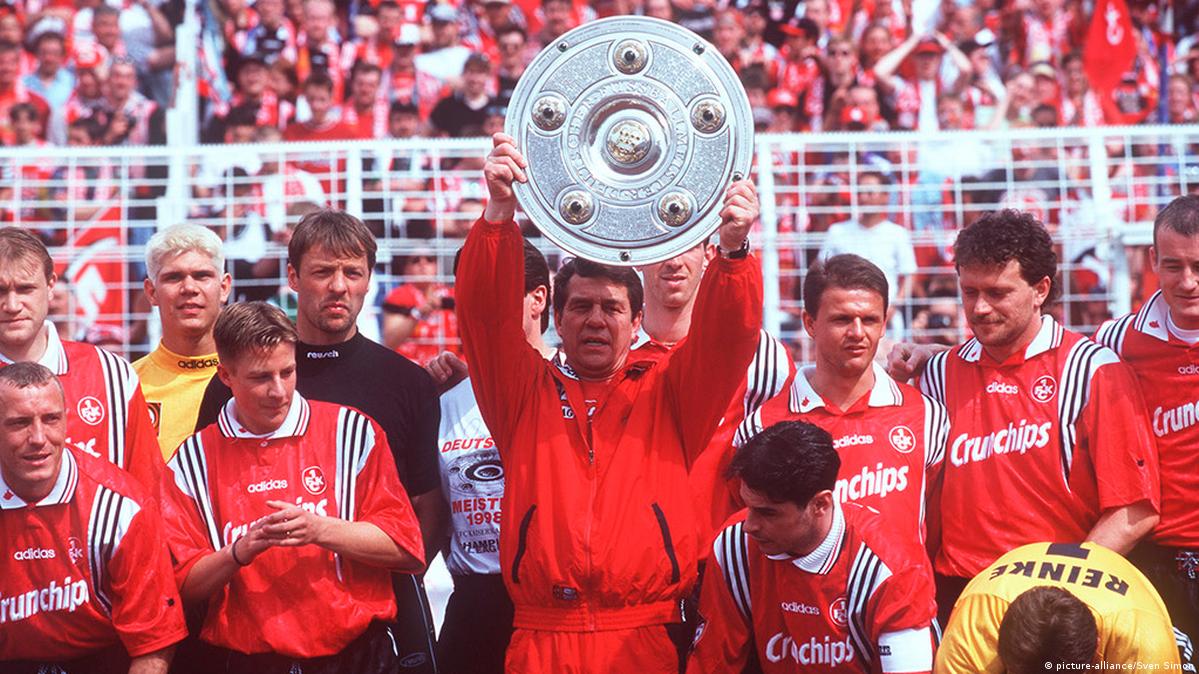
The club's most epic triumph came in the 1997-98 season, when Kaiserslautern, fresh off promotion back into the Bundesliga, went all the way and won the league in their first year back in the top tier, an incredible feat. They then reached the UCL quarter finals in the following season, crashing out against Bayern Munich.
 |
| From dw.com |
The other champions
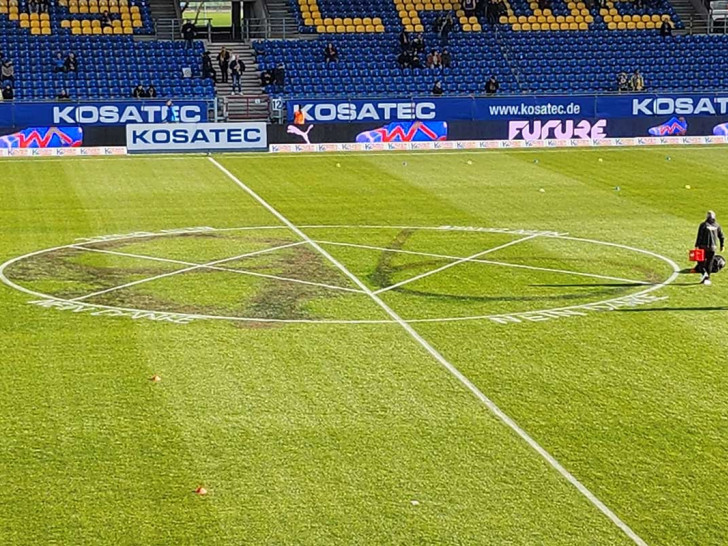
Hannover 96 also compete in the 2. Liga, having won the German championship twice and the cup once in 1992. They compete in the Lower Saxony Derby against fellow 2. Liga side and 1967 Bundesliga champions Eintracht Braunschweig, as the two cities are only 55km apart. The rivalry was reinforced when the Bundesliga was founded in 1963: Hannover, strong of their bigger stadium, higher attendances and better financial prerequisites, were sure they would receive a spot in the newly formed league, however Braunschweig had gotten a better result in the 1962.63 season, so Eintracht got the spot instead, causing protests from the club and fans in Hannover. One unusual showing of this rivalry came in 2023, when Hannover's fans broke into Eintracht's stadium overnight to draw a massive 96 on the pitch.
Another former German champion is Karlsruher SC: although their only league title came in 1909, they also won a couple cups in 1955 and 1956 and the Intertoto Cup in 1996.
Last but not least, Greuther Fürth complete the list of the eleven former champions that now play in the 2. Liga: they have been crowned champions in 1914, 1926 and 1929, and have competed in the top tier of German football as recently as 2022.
The many big clubs competing in the 2. Liga will always make for a great show for fans and neutrals, but this season in particular the promotion fight is as tight as it gets and with so much at stake everyone should be tuning in to witness what will be a historic final rush to the finish line, with Koln currently top of the table with Hamburg and Kaiserslautern breathing down its neck and Magdeburg, Fortuna, Paderborn, Hannover, Elversberg, Nuremberg and Karlsruhe all hopeful of reaching third place and the playoff spot.
Comments
Post a Comment