A.C. Reggiana are an Italian club from Emilia-Romagna, they represent the city of Reggio Emilia and are one of many provincial teams that live most of their existence between Serie B and Serie C with the occasional promotion in Serie A. Often confused with calabrian club Reggina due to similar names and colours, their golden era came in the 90's, when they took part in their only three Serie A campaigns since the league was created in 1929.
When the Granata reached a respectable 13th place in the 1993-94 Serie A season, it was clear that their historic Mirabello stadium, which had hosted their home matches since 1919, was not an adequate ground for top tier football anymore. A new, modern stadium was built in the outskirts of Reggio Emilia, the 30,000 seater Stadio Giglio, named after a milk company that bought the naming rights straight away.
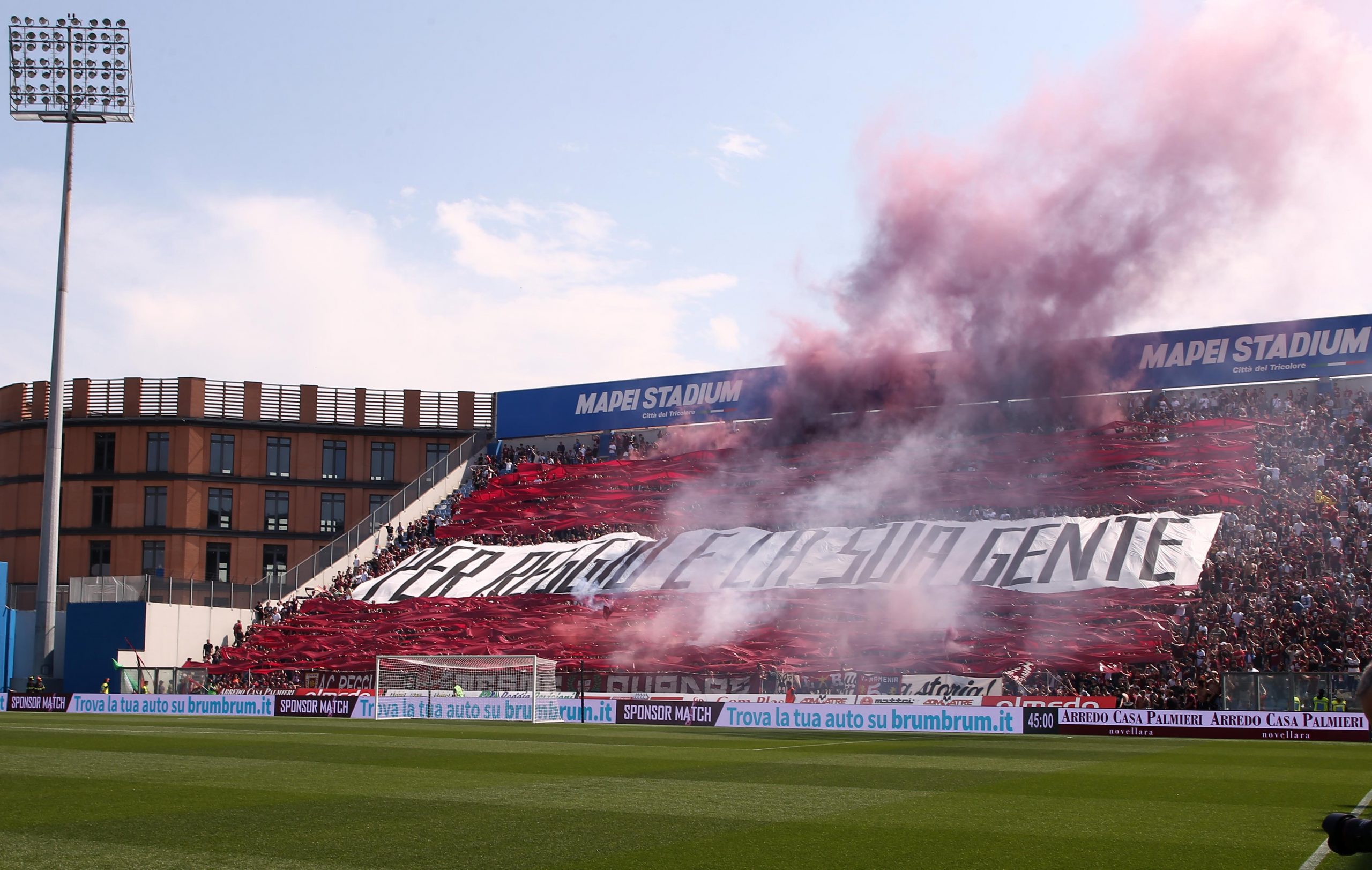 |
| Reggiana ultras populate the new stadium |
Reggiana played their last match at the Mirabello on April 2nd, 1995, losing 0-1 to Inter Milan, and then moved to the new ground for the last few matches of the season, the first of which would be another loss, this time 1-2 to Juventus, on April 15th.
The Giglio saw Reggiana relegate to Serie B, then get promoted to Serie A one last time in 1996-97, and finally return to their Serie B-Serie C limbo until 2005, when in true Italian fashion the club went bankrupt and lost the ownership of the stadium. They kept playing there the following years despite not owning it anymore.
A first auction to find a new owner for the stadium was held in 2010, but the price of €6m was too much for any bidder. Meanwhile, fellow Emilian club Carpi started playing there as well, following their promotion to Lega Pro-Prima Divisione (the third tier at the time), and the stadium changed its name to Stadio Città del Tricolore, taking the name from the fact that the Italian flag was created in Reggio Emilia in 1797.
In 2013 the new president of Reggiana, Alessandro Barilli, tried to buy the stadium, so a new auction was set in the month of December. Meanwhile, in the summer, U.S. Sassuolo had earned their first ever promotion to Serie A, and needed a stadium to play in, so they rented the Reggio Emilia stadium and started looking at the auction with great interest. Giorgio Squinzi, owner of Sassuolo and of chemical industry Mapei, made the winning bid and managed to buy the stadium for just €3.75m and gave it his company's name: to this day the ground is still called Mapei Stadium.
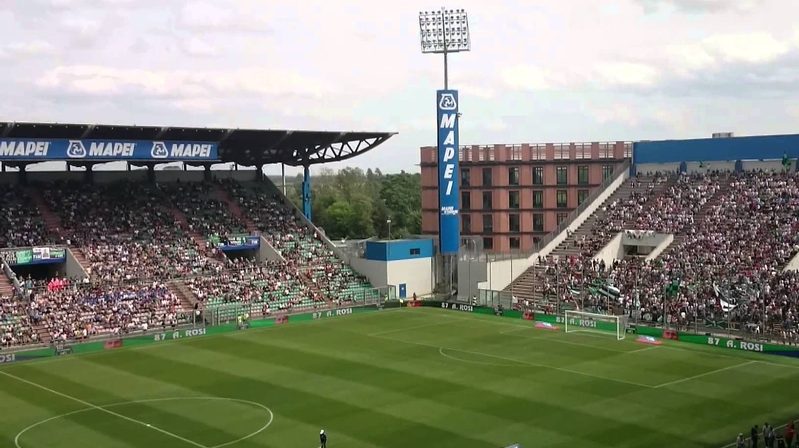 |
| The Mapei sponsorship is clearly visible everyone around the stadium |
Sassuolo are a small town in the province of Modena, about 45 minutes away from the city of Reggio Emilia. Because of the modest size of the town and the lack of any historic success, Sassuolo's fanbase is understandably small, and often made fun of by the other fanbases. In their defense, they haven't played in their home ground, the Stadio Enzo Ricci, since 2008, so the attendances are even worse than what a town of 40,000 inhabitants could hope for.
 |
| Sassuolo's Stadio Ricci is too small for Serie A and Serie B matches |
All these years, the fans from Reggio Emilia saw this small club from another province come in their city to play the biggest teams in the country, while they were stuck playing local clubs in the lower divisions. Over the last decade, the anti-Sassuolo sentiment has grown in the city, with banners and graffiti suggesting that it's time for the black-green team to move away from the city.
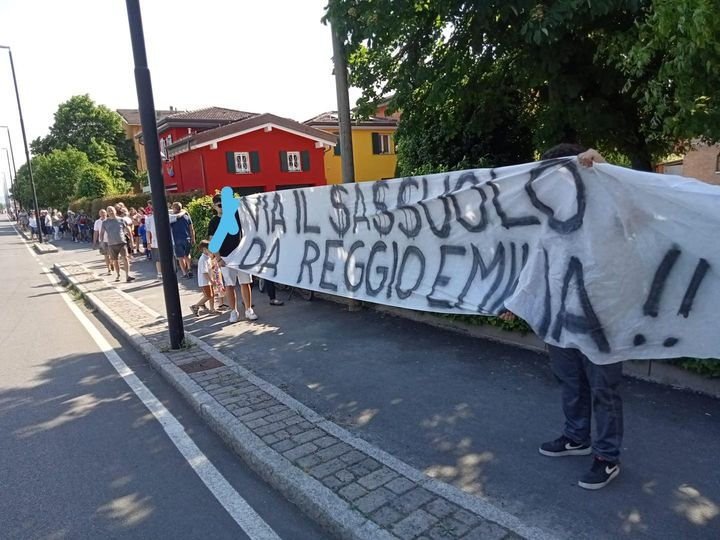 |
| "Get Sassuolo out of Reggio Emilia" |
The Granata fans have never had the chance to show their dominance over their own city until this year's Serie B campaign: a disastrous season for Sassuolo in 2023-24 saw them relegate for the first time since going up in 2013, meaning the two clubs would finally face off in a match that is not technically a derby but certainly feels like one.
On November 29th the first encounter between the two sides in over 16 years ended with a 0-2 victory for the league leaders Sassuolo. The quality gap between the two teams is big, considering the Neroverdi can afford to play Serie A-proven players like Laurienté, Thorstvedt, A.C. Milan's nightmare Domenico Berardi and former West Ham midfielder Pedro Obiang.
On the stands, however, the story was completely different. Over 11,000 spectators, including 700 away fans, attended the match mainly to display their dissent towards Sassuolo and their presence in the city.
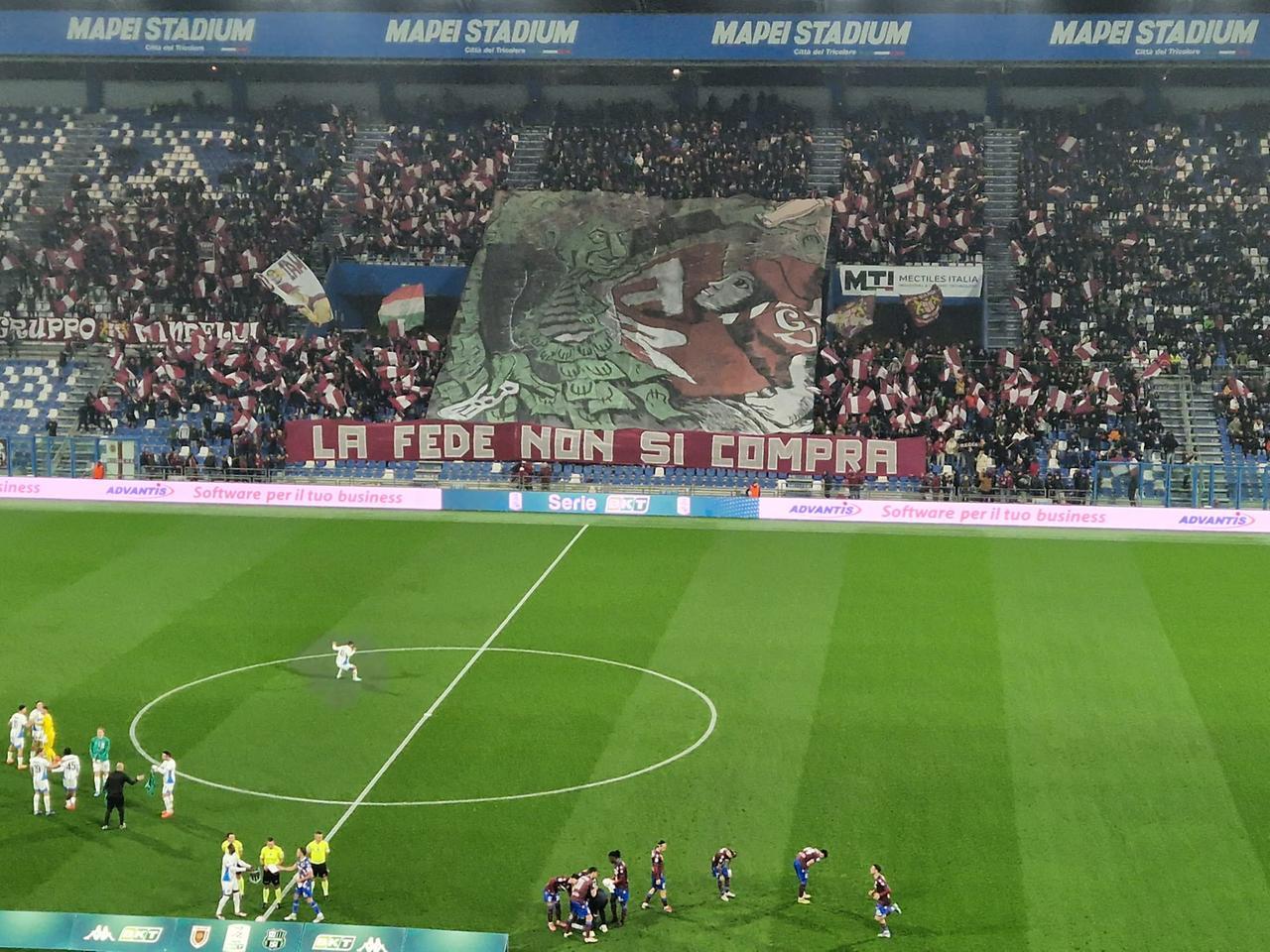 |
| "Faith can't be bought", a banner displayed by Reggiana fans before their match vs. Sassuolo |
This next saturday, on March 29th, the two sides will face off again: Sassuolo are 14 points clear of 3rd place, so their journey back to Serie A is almost complete, while Reggiana need vital points in a chaotic fight to avoid relegation, with 10 clubs within 5 points of each other.
Given that both sets of fans usually stand in the south stand, Sassuolo technically being the home side means that Reggiana fans would be forced to go in the opposing north stand, usually reserved for traveling fans. However, Gruppo Vandelli and Teste Quadre, the ultras groups fro Reggiana, have made known that if they're not allowed in their traditional section they are going to riot.
The next derby-not derby is absolutely massive for both teams, and not only for the points that will be awarded.
Comments
Post a Comment