 |
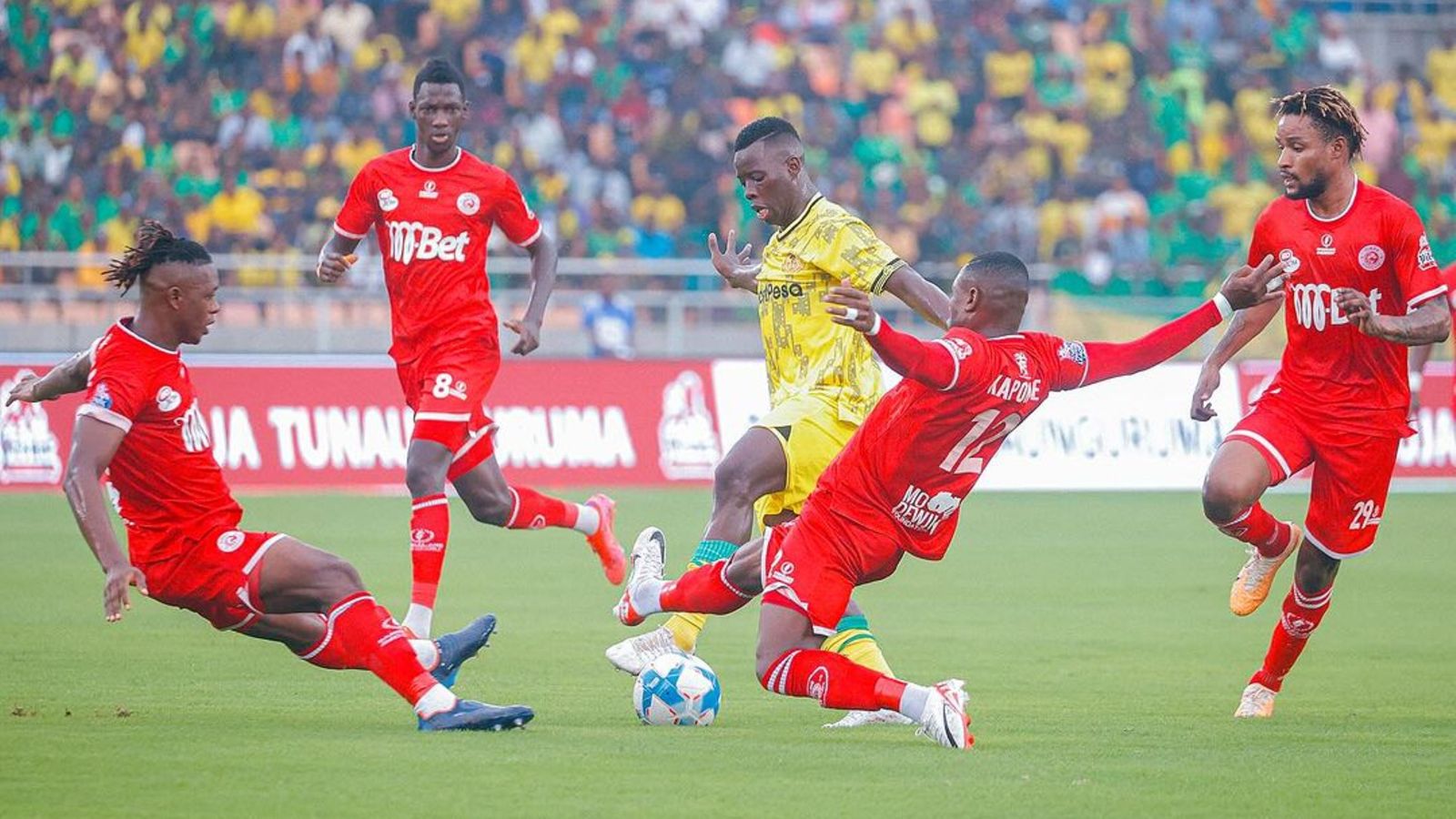
| Simba defenders tackle a Young Africans player [thecitizen.co.tz] |
Young Africans, who are more commonly just called Yanga by their fans, were formed in 1935 by Dar es Salaam residents who decided to form their own football club and compete in a league full of non-African clubs.
Ever since its birth, Yanga has been a symbol of the anti-colonial movement, becoming associated with Tanganyikan nationalists and freedom fighters. The club was so representative that a political party (Tanganyika African National Union, TANU) even adopted their traditional yellow and green as their own colours. At some point in history the party even held secret meetings at the club's facilities in order to hide from the Brits!
Yanga has historically represented the working-class and low-income African communities of Tanganyika (which is pretty much the mainland territory of modern day Tanzania). Over the years, with success flooding in, the club has become the most successful in the country: their cabinet displays 26 Tanzanian Premier League titles, 7 Tanzanian Cups, 7 Supercups and 7 Tusker Cups.
 |
| Yanga's squad [farpost.co.za] |
Ironically, Yanga's lack of success in 1935 and 1936 is what got some of its members to leave and form another team, which they would name Queens F.C. at first, then Sunderland, and then Simba S.C., meaning "lion" in Swahili.
Simba, who are also based in Dar es Salaam, have won 21 league titles themselves, as well as 4 Cups, 10 Supercups and 5 Tusker Cups. While named Sunderland, this club attracted the sympathies of the wealthier communities, in contrast to Yanga. In particular, foreign people like Asians and Europeans started supporting Simba, and the clash between the two sides began reflecting broader social tensions.
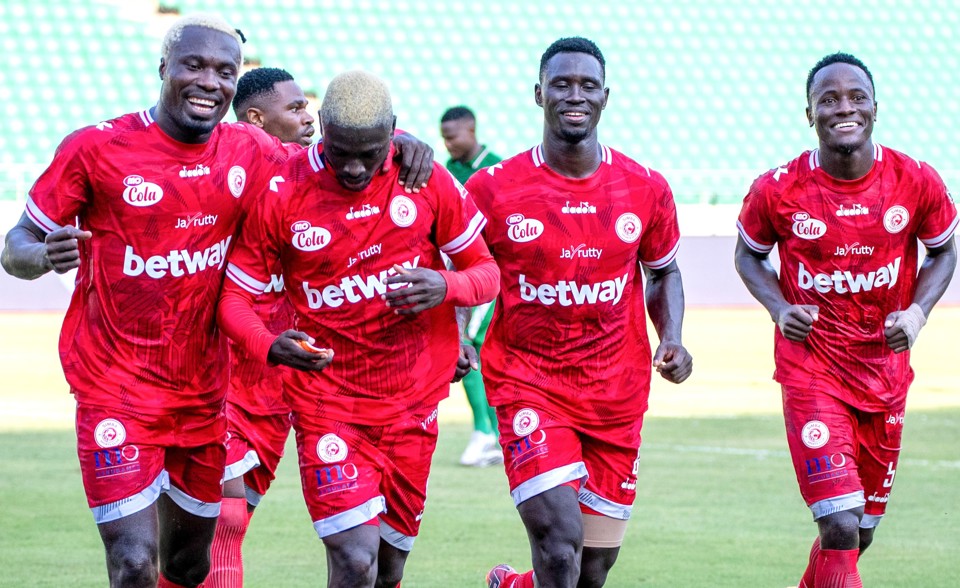 |
| Simba players celebrate a goal [cafonline.com] |
The Kariakoo derby, which takes its name from the district in which both clubs have been founded, has mostly lost its social significance, but it has remained by far the biggest and most important fixture in Tanzania and in Eastern Africa. Yanga and Simba have won every league title bar one since the turn of the century, with the only exception coming with Azam FC's title in 2014, and the derbies between the two sides are the only fixtures that can fill the Benjamin Mkapa Stadium in Dar es Salaam.
The stadium, which can hold up to 60,000 spectators, was built in the 2000's by the then President of Tanzania Mkapa, and hosts the home matches of both Yanga and Simba. As just said, the derbies are the only matches that can actually fill the stadium, with regular league matches attracting extremely lower figures, although the venue is also used for the National team matches.
 |
| The Benjamin Mkapa Stadium |
Over the years, some notable matches have taken place between the two clubs. The most famous is definitely Simba's 6-0 win in 1977, which caused a split within Yanga, with some players who left and joined Pan African SC and them win some trophies between the 70's and 80's.
Another memorable match happened last June, but we have to take a step back to March to grasp the context. Yanga was supposed to host Simba in a league fixture, but Simba's attempt to hold a training session inside the stadium on the day prior to the match was welcomed with locked gates which kept them outside and unable to train on the pitch. Given that this training session is a right of the visiting team according to the league rules, Simba refused to play, and the match was eventually postponed.
Yanga officials allegedly blocked them from entering fearing that Simba intended to use witchcraft to influence the match, while some reports even suggested that Simba's team brought goats with them for ritual sacrifices. Some other rumours said that Yanga hired gangs to stop the rivals from entering, while some more said that Simba hired them to find an excuse to not show up because "Yanga was too good" (I am not making this up, I swear).
Witchcraft is frowned upon in sports in regions where such practices are prevalent, because it is believed to corrupt fair competition, it can lead to conflicts and disputes and can be used to demoralise the opposition by making them feel powerless against supernatural forces. It can also reinforce cultural stereotypes, exposing the region to ridicule from the outside and affecting the country's position internationally.
Whatever the reason, the match was not played in March, and the season went on.
By June 22nd, the league had come to its end, with Yanga on top at 79 points and Simba in second place at 78, but the derby had not been played yet and was scheduled for the 25th. Over the dispute, Yanga obviously threatened to not play the match, but the derby did eventually take place and the leaders managed to win 2-0 to hold on to the lead and their fourth straight league title.
 |
| Young Africans celebrate their 2024-2025 title [ghettoradio.co.ke] |
Despite the two clubs not having found particular success in continental competitions, their results are improving: Young Africans reached the Champions League quarter finals once, and Simba has done so four times over the last few years. There may not be much competition for them in Tanzania yet, but Simba and Yanga pushing each other will definitely be interesting in the future, and the Kariakoo derby is a massive asset for football in the region.
If you're interested in a similar article, I've also covered Orlando Pirates and Kaizer Chiefs' derby in South Africa.
Comments
Post a Comment