While cricket is by far the most popular sport in India, football is actually the most followed in some states like Goa, Kerala and West Bengal. The latter in particular is known for its passion for the game, and the city of Kolkata, the state's capital, is one of the main hubs of Indian football.
There's three main football clubs in Kolkata. Mohammedan SC, who represent the Muslim community of West Bengal, are the least successful of the three: the Black Panthers had a golden era in the 1930s and 1940s, but had a major downfall in the late 20th century and have only recently made a return to the top division, competing in the Indian Super League in 2024-25.
The two other clubs, on the other hand, are total juggernauts of Indian football. While not necessarily being representative of the Hindu community in the region, the fact that Mohammedan has "claimed" the Muslim following has left the remaining fans split between Mohun Bagan and East Bengal.
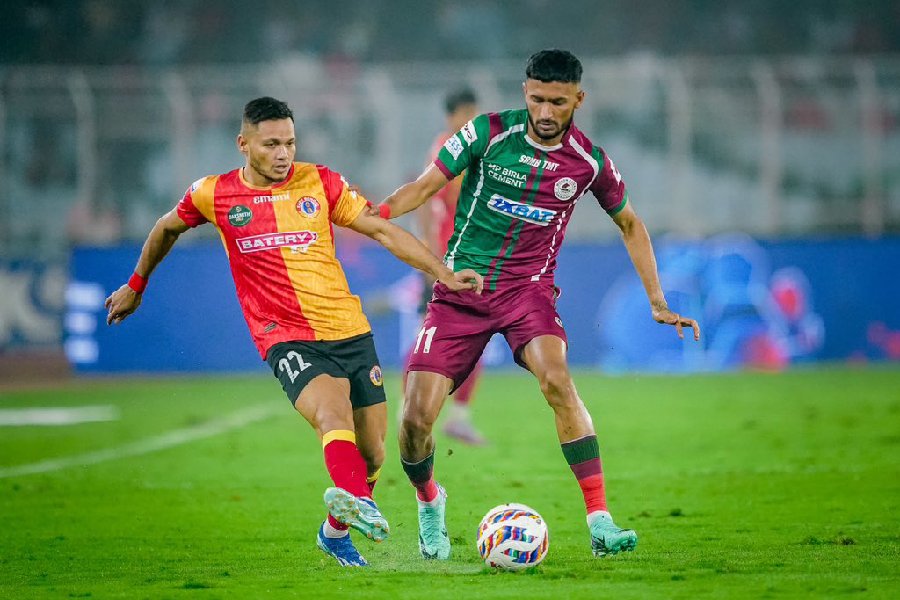
A moment from a derby [Mohun Bagan SG]
In particular, Mohun Bagan, founded in 1889, are one of the oldest sports clubs in India, and have gained a massive following in the indigenous community around Kolkata, while East Bengal, founded in 1920, are representative of the massive immigrant community that moved from modern day Bangladesh to the city in the early 1900s.
This set-up is somewhat similar to the Old Firm derby in Glasgow: Mohun Bagan, like Rangers, are supported by the natives, and East Bengal, like Celtic, are the club of the immigrants. This context has, over the last century, made the Kolkata Derby become the most heated rivalry in Indian football and one of the biggest in all of Asia.
Stadiums
Maidan is a large urban green space, containing parks, playgrounds and public venues right in the middle of Kolkata. It is often referred to as the lungs of Kolkata due to its greenery, and is one of the city's most popular tourist attractions.
It is one of the most important places in the city, as it is a hub for the community. All three of the big clubs from Kolkata have a ground inside the park: Mohun Bagan, East Bengal and Mohammedan are neighbours inside Maidan, with their stadiums all within walking distance with each other.

The Eden Garden stadium with the football grounds in the background
Despite those three stadiums all having between 15,000 and 23,000 capacity, they are mainly used as training grounds and as hosts for the clubs' matches in the Calcutta Football League, a regional league similar to the Brazilian state leagues.
For the Indian Super League matches, the top tier of Indian football, the teams share the Salt Lake Stadium. The massive multi-purpose arena has a capacity of 85,000, and is located in the Salt Lake City district, a couple miles East from Maidan.
It is rare that such a big stadium is filled at a common league match: the only time the stands are packed is when the Derby is on, as both clubs attract big following for the most important match of the season.
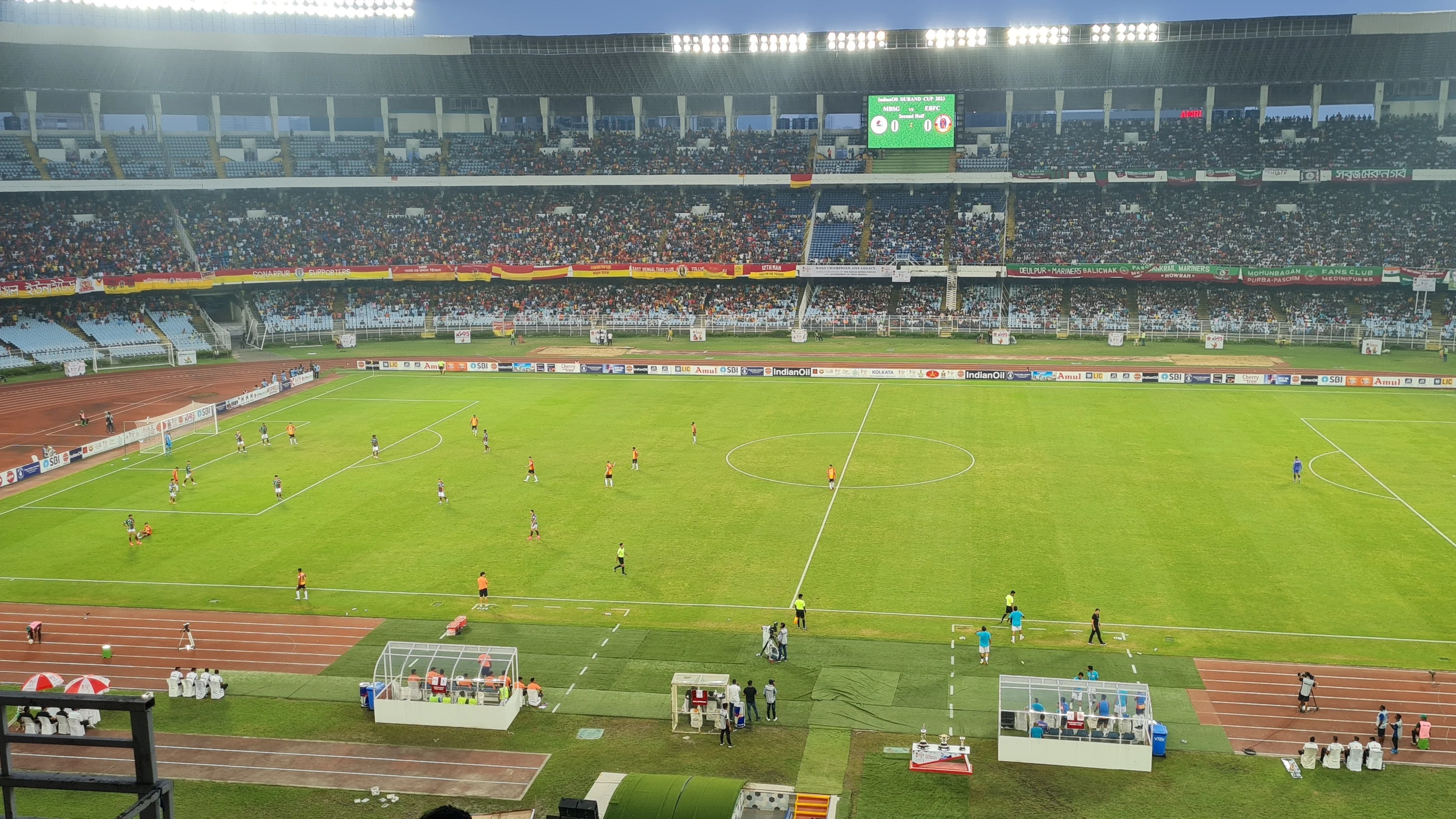
A full Salt Lake Stadium with both sets of fans [Gautam Bhattacharyya]
Honours and support
Mohun Bagan have won an astonishing 265 trophies over their 136 years of existence, making them by far the most titled club in India. The Mariners have won the National Football League/Indian Super League seven times, the ISL Cup twice, the Federation Cup 14 times, the Durand Cup 17 times, the IFA Shield 23 Times and the Rovers Cup 14 times. On top of this, they can boast an additional 84 regional titles!
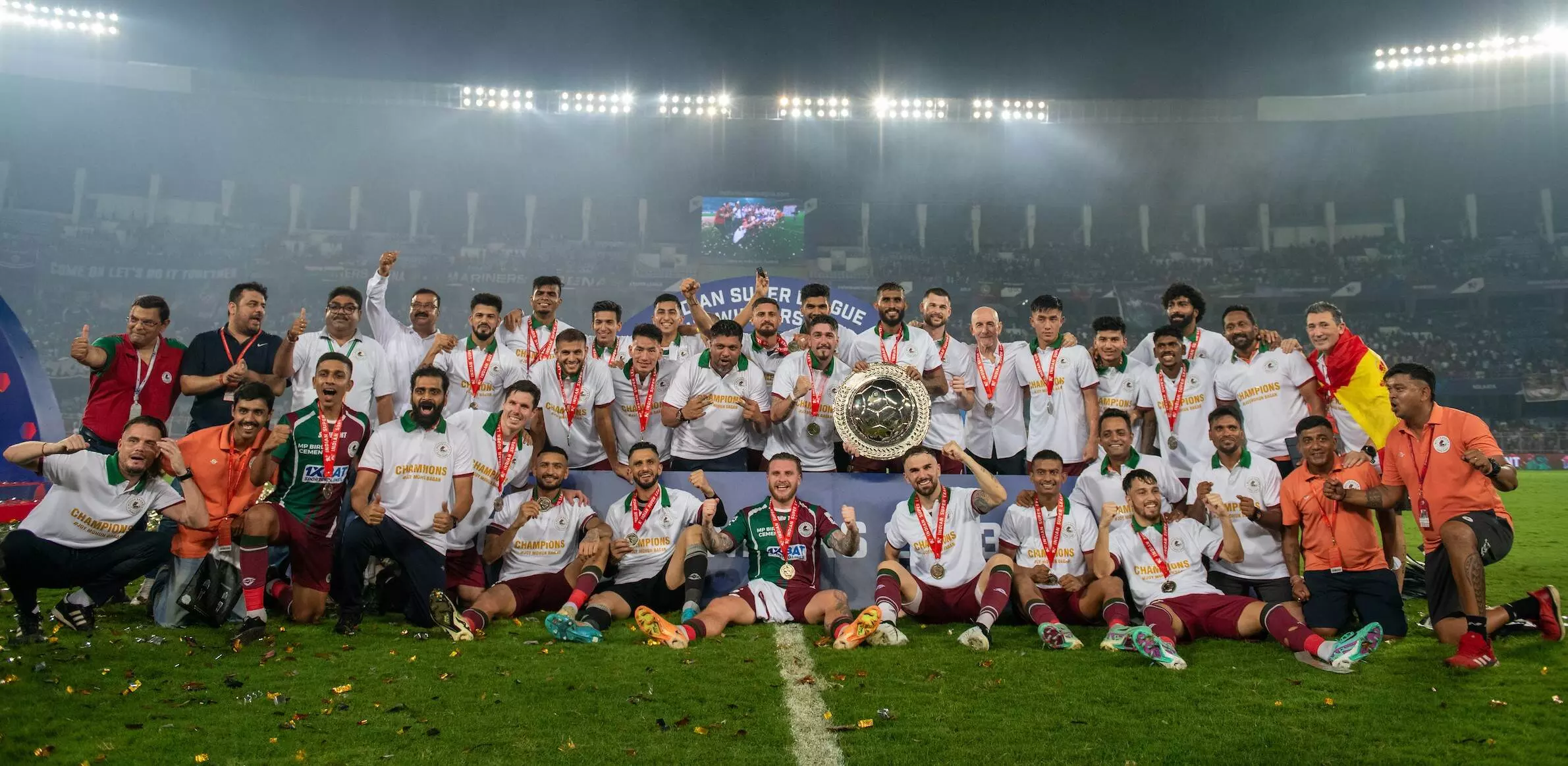
Mohun Bagan celebrate the 2024 Indian Super League title
East Bengal have won over 150 trophies themselves, with the most notable being three league titles, nine Federation Cups, three Super Cups, 29 IFA Shields, 16 Durand Cups and 10 Rovers Cups. Internationally they have also won the 1985 Central Asia Champions' Cup and the 2003 ASEAN Club Championship.
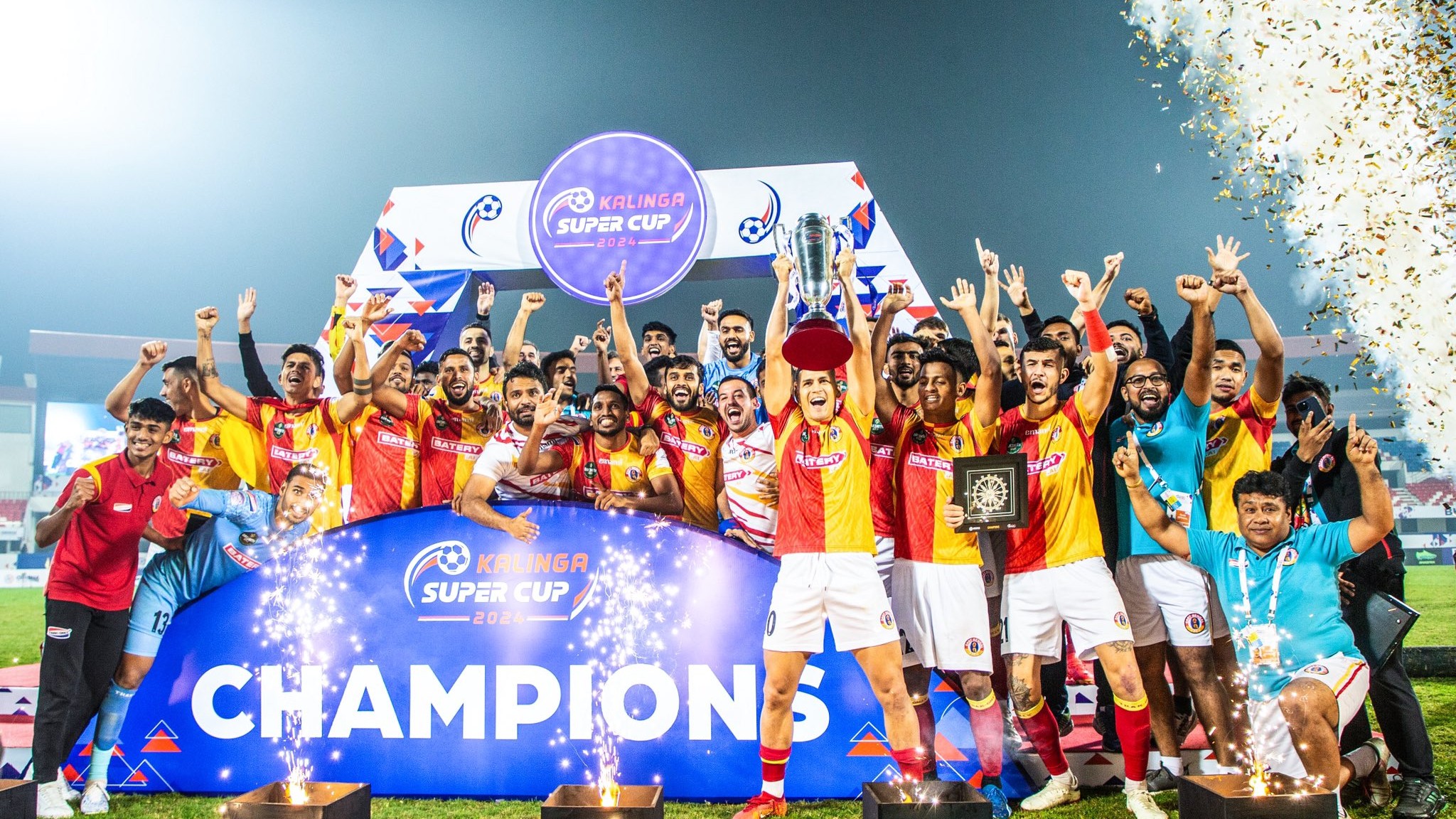
East Bengal celebrate the 2024 Super Cup [East Bengal]
Being among the oldest football institutions in all of India, the two clubs have become the two most successful teams in the country by a mile. They are also the most supported: in the 2024-25 season Mohun Bagan led the league in average attendance with a whopping 35,000 spectators, and East Bengal were in second place with over 18,000.
The great success accomplished by the two clubs over their long history and the great following they have developed mean that this derby has become the biggest fixture in Indian football.
Notable matches
While this rivalry is one of the best assets of the Indian football universe, over its history the Kolkata Derby has had its share of unfortunate events. The most notable came on August 16th 1980, when East Bengal and Mohun Bagan fans were unusually seated together, and not in different stands.
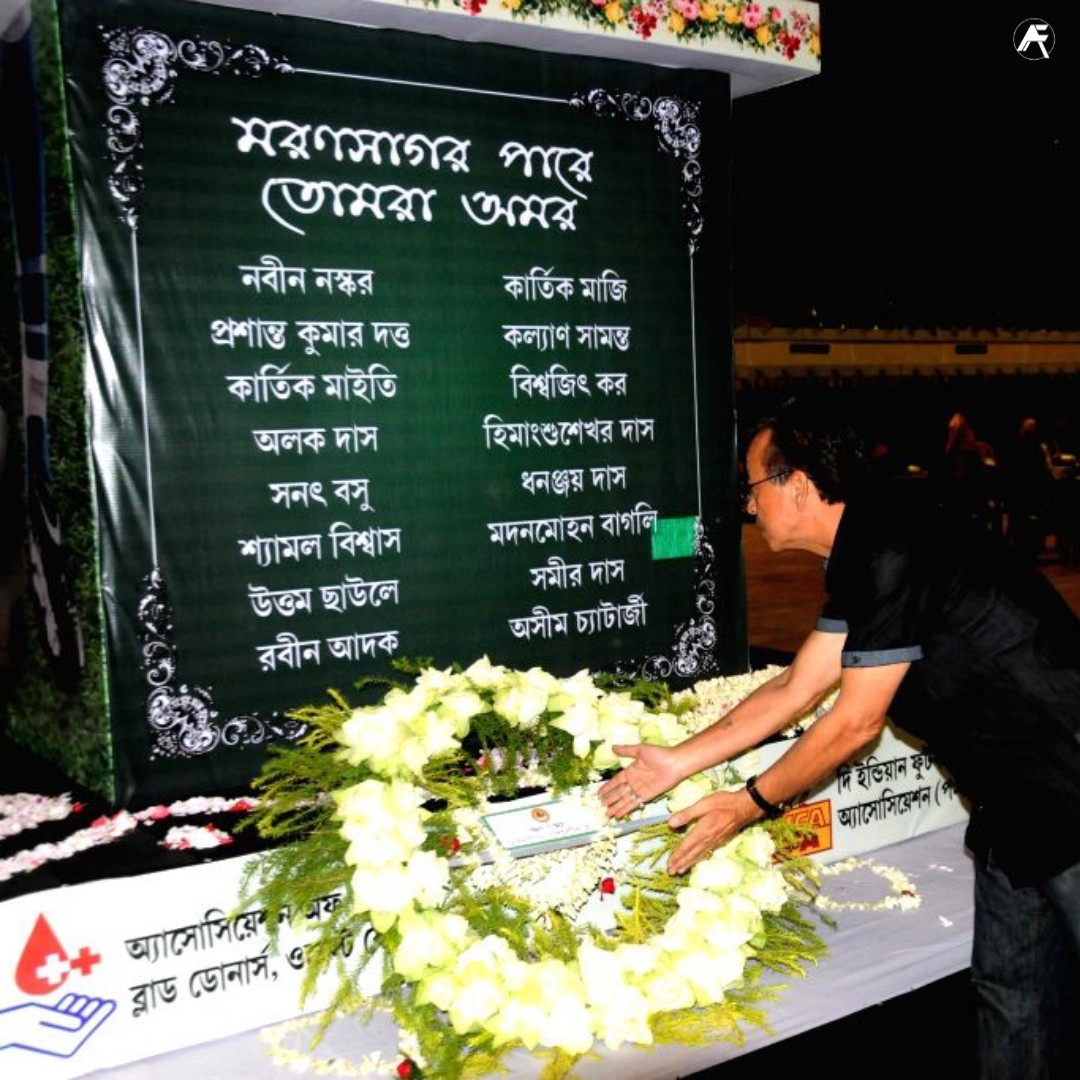
Poor decisions from the referee caused riots in the stands which spread all over the stadium, making fans run towards the exits to reach safety. Unfortunately, this rush caused a stampede which took the lives of 16 people. Since then, every August 16th the Indian federation observes the Football Lovers' Day, where fans gather to donate blood.
A man celebrates the memory of the 16 fans during Football Lovers' day
East Bengal was a dominating force in the 1970s, and won the 1975 IFA Shield final 5-0 in the rivals' own ground. Such was the shame for the defeat that several Mohun Bagan players were forced to spend the night hiding on a boat on the Ganges river to avoid their own fans. A shocked fan, Umakanto Palodhi, committed suicide and claimed on his note that in his next life he would become a Mohun Bagan footballer to take revenge for the humiliation.
In 1997, a derby in the Federation Cup semifinal attracted 131,781 fans to Salt Lake Stadium, becoming the fifth highest attended cup tie of all time, behind four Scottish Cup matches help at Hampden Park in Glasgow. Some sources claim that the crowd could have actually been of around 140,000 people, with 8,000 of them getting in the stands without any ticket by climbing over the gates.

A picture from the 1997 derby
While the results of the National team still don't show it (India still hasn't taken part at a World Cup), the love for football in India is still huge, especially in West Bengal, where the Red and Gold of East Bengal and the Green and Maroons of Mohun Bagan are as close as they can get to a religion without becoming blasphemous.
The Derby is still as big as ever, and its massive crowds are the staple to help the Indian football movement move forward in the future.
Comments
Post a Comment