Club Cienciano are one of the oldest and most present clubs of the Peruvian Primera Division. They have never been crowned Peruvian champions, but, somehow, they are the only club from the country to have ever won a continental competition. And their journey to victory is a work of art.
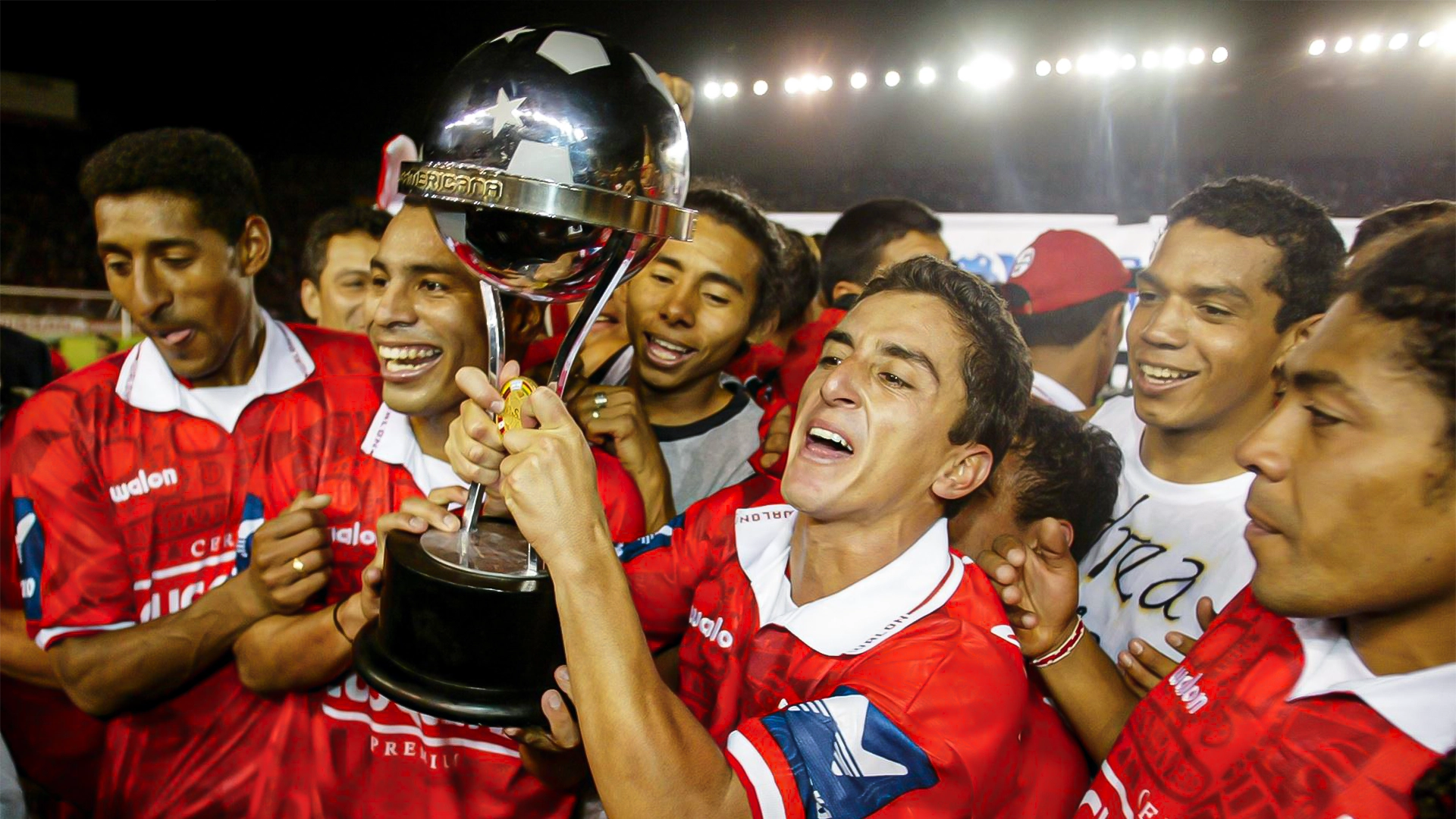 |
| Cienciano lift the only ever Peruvian continental trophy [cienciano.com] |
They are based in Cusco, a historic city that was built by the Killke people around 3,000 years ago before the arrival of the Inca in the 13th century.

The ruins of ancient Cusco [blog.incarail.com]
In this ancient place, they share the Estadio Inca Garcilaso de la Vega with fellow Liga 1 sides Cusco FC and Deportivo Garcilaso. The stadium, one of the biggest in Peru with a capacity of 45,000, has never seen a Primera Division title between the three sides: none of them have ever been crowned Peruvian champions.
Out of the three, Cienciano is the most successful one. Despite never actually detaining the National title, la Furia Roja has won three half-season tournaments. In most South American leagues the traditional format has the league divided in two rounds, the Apertura and the Clausura, the leaders of which then face off to claim the league title. Cienciano won three of these rounds but never managed to win the final, losing to Alianza Lima in 2001 and 2006 and to Sporting Cristal in 2005.
The Reds have found plenty of success in the regional leagues during the 20th century, winning 29 titles in the Cusco local leagues, but these are not the main attraction of their trophy cabinets, nor are the three Apertura and Clausura titles.
What Cienciano is actually known for is their 2003 season, when a fairytale, a miracle, name it however you find more appropriate, happened.
Cienciano's squad for the 2003 season was a blend of veterans and emerging talents. The team was coached by Freddy Ternero, at his third tenure at the club, and captained by goalkeeper Oscar Ibañez.
Acasiete, Carlos Maldonado, Portilla, Moran, Carlos Lugo and Llanos composed the defensive package. Martin and Julio Garcia, Juan Carlos La Rosa and Juan Carlos Bazalar controlled the midfield. German Carty, Rodrigo Saraz and Paolo Maldonado were given the task to run the attack.
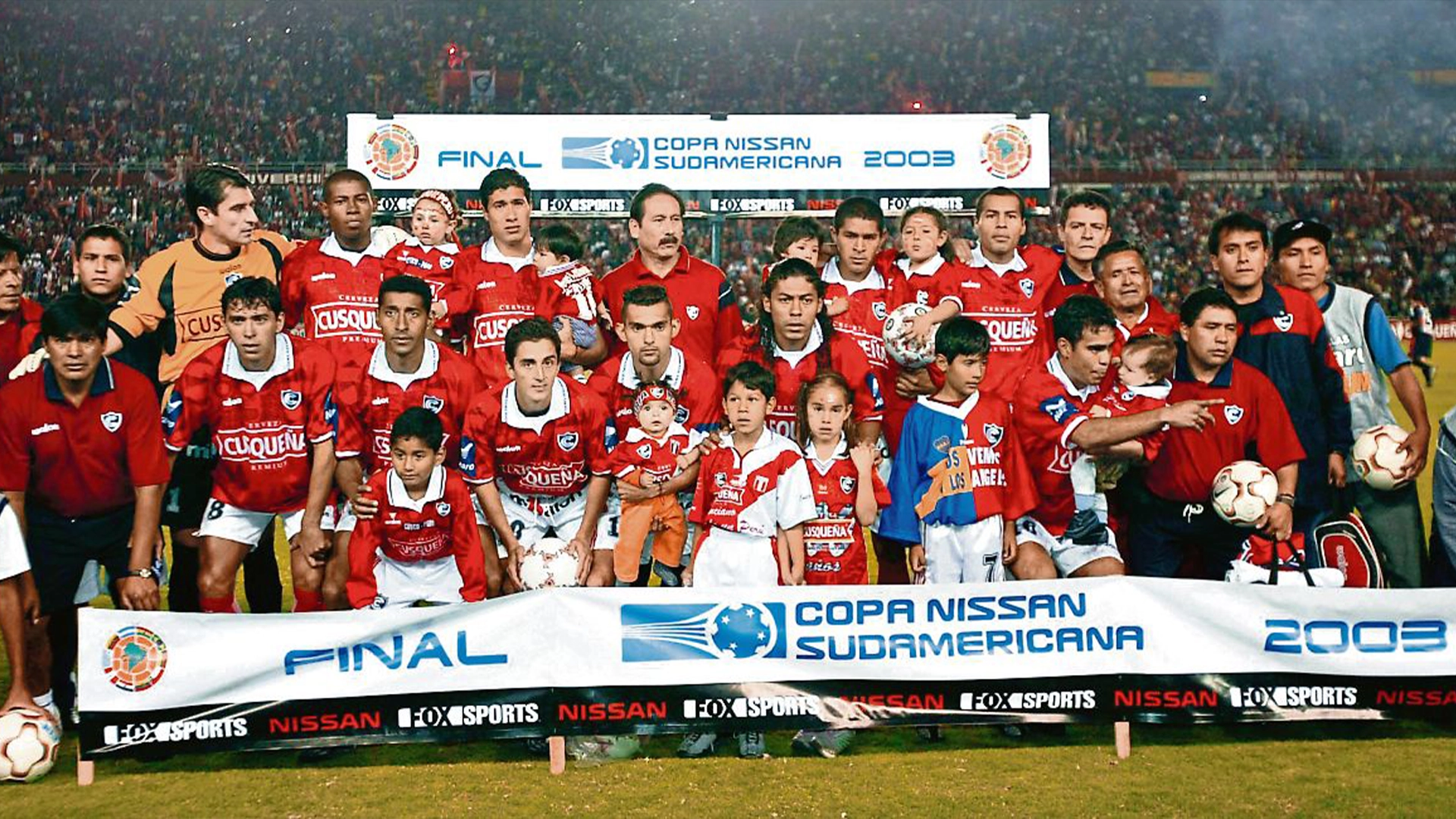
Cienciano's 2003 squad posing with the staff and their kids [cienciano.com]
As we said, the Peruvian league was divided in two stages. The Apertura, which takes place in the first half of the year, saw the 12 clubs in the top division face off against each other twice, for a total of 22 matches. First place would earn a spot in the 2004 Copa Libertadores, while second, third and fourth were good enough to book a ticket to the Copa Sudamericana qualifying rounds, which is basically South America's Europa League.
Heavy favourites Sporting Cristal and Alianza Lima took off in the standings, claiming first and second place respectively with quite a margin over the rest of the table. Only two more spots were left for the competitors, but in a tight fight with Sport Boys and Alianza Atlético those spots were conquered by Coronel Bolognesi and Cienciano.
An impressive home record helped Cienciano hold on to fourth place, partly thanks to the inhospitable altitude and oxygen levels that away teams have to bear at 3,400m/11,000ft in Cusco. The 5 points they earned against the top two were crucial as well, and were a sign of things to come in terms of results against top sides.

Cusco's Estadio Garcilaso stands at 11,000 ft over sea level [rpp.pe]
The top four faced each other in two playoffs to qualify for the Copa Sudamericana. Alianza Lima defeated Coronel Bolognesi, and Cienciano had the prohibitive task of knocking out Apertura champions Sporting Cristal. The first leg in Cusco was a 1-1 draw, but a decisive 1-2 victory in Lima was enough for Cienciano to qualify for the tournament.
With the way the Copa worked, Peru and Chile shared the same path. The two winners from the previous playoff round had to face each other, and the winner would meet the Chilean playoff winners. This means that the new obstacle on Cienciano's way was second placed Alianza Lima.
At this point, it started to feel like Cienciano had figured the top two sides out. They had earned two wins and three draws in the six meetings of the year thus far, so although still challenging, beating Alianza Lima began to feel doable.
And again they did it. A 1-0 victory at home at the beginning of August and a 0-1 victory away at the end of it won Cienciano a spot in the next round. A club that had never been Peruvian champion before had just knocked out the two strongest clubs in the country.

Cienciano and Alianza Lima face off in the Copa Sudamericana playoff in August 2003 [historialblanquiazul.com]
To celebrate the feat, a tie against Universidad Catolica awaited them. Multiple times champions of Chile, multiple times Chilean Cup winners, Copa Libertadores runners-up in 1993 as well as Copa Interamericana champions, the first international stage of the tournament was going to be as tough as it sounded like.
The plan for the first leg was the same every time a club had to travel to an altitude they were not used to. Cienciano's goal was to go all-attack and play the Chileans out of the park when they would eventually start to struggle with the lack of oxygen, but nobody actually expected the plan to work as well as it did. After 50 seconds Cienciano were already in front!
After the first goal, the ball kept rolling and Universidad Catolica couldn't do anything about it. Una goleada, as they say in South America, 4-0 to Cienciano and the hope to hold on to the lead in Santiago.

German Carty, Cienciano's striker, during their 4-0 win over Universidad Catolica [libero.pe]
Maybe it was the Cristal sponsor on the Chilean club's kits that made them think they were still in Peru, maybe it was luck. Cienciano started off the same way they had ended the first leg, and thanks to opposition defender Cristian Alvarez scoring in his own net for the second time in two matches, they were 5-0 up on aggregate after 10 mintues.
Universidad Catolica tried to fight back but could only manage three goals, meaning Cienciano's run would continue. A historic quarter-final, the first in their history, awaited them. The opposition? The legendary Santos FC from São Paulo.
Alex, Diego, Robinho and Ricardo Oliveira were just some of the names on that Santos team, players that went on to play for Chelsea, Juventus, Real Madrid and A.C. Milan among other massive teams!
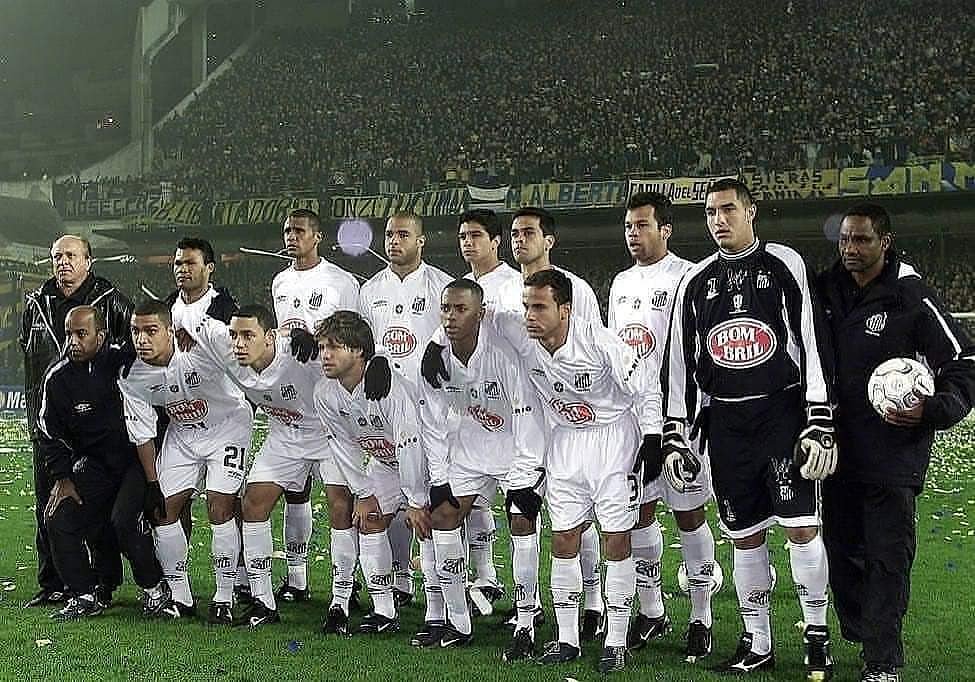
Santos was stacked in 2003
The first leg was played in Brazil. The home side attacked, and attacked, and attacked, but due to poor finishing and at times bad luck, they couldn't score and the first half ended goalless. Santos was attacking so much that Cienciano had to make some defensive substitutions at half time already, but at the start of the second half nothing had changed.
Then, around the 70th minute, Cienciano earned a foul just in front of the halfway line. The cross was launched in the general direction of Cienciano's only striker Rodrigo Saraz, who in the end was nowhere near the ball unlike Santos' centre-back Alex: the Peruvians' incredible luck struck again, and for the third match on the bounce the opposition had scored for them.
In a match that had no business being still 0-0, Cienciano had somehow scored first. A win would have been too unfair though, and Robinho equaled just minutes later with a strike from outside the box. Given how the match played out, a draw was definitely acceptable to say the least.
In the second leg in Cusco, the momentum was all for the home side. Once again, the altitude was crucial as the Brazilians suffered, and Carty scored a brace in the first half (and added a little dance after the second goal while at it). It was enough to send Santos packing, despite their equalizer before Cienciano's second goal to which they had no answer for.
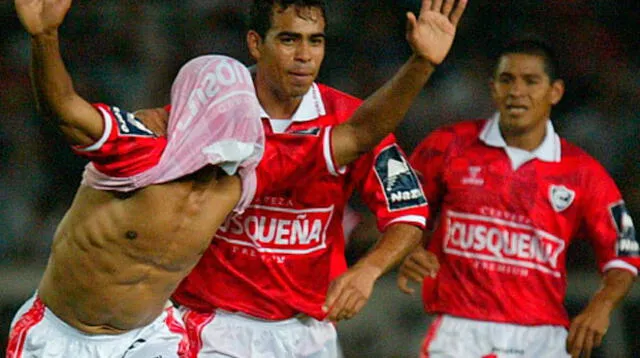
Carty used to celebrate his goals pulling his shirt onto his face and dancing [elpopular.pe]
At this point, come November, Cienciano had knocked out Sporting Cristal, Alianza Lima, Universidad Catolica and Santos. They were on the brink of history, as no Peruvian club had ever conquered the continent. Despite the Clausura tournament being played, their full focus was on the Copa Sudamericana semifinal at hand against Colombian club Atlético Nacional.
Then seven time champions of Colombia, Atlético Nacional had also won a Copa Libertadores, two Copa Interamericana as well as two Copa Merconorte. They had the continental pedigree to handle the Peruvians, but at this point Cienciano looked unstoppable. Would Atlético Nacional also crumble?
Of course they would. Half an hour into the first leg in Medellin, their back line gifted Carty a one-on-one with the keeper with a horrendous pass in the middle of the box, and the Peruvian striker took full advantage of the situation and put the visitors in front.
In the second half the home side, who were Copa Sudamericana finalists just the year prior, leveled the match instantly, but with time running out and knowing they had to go to Cusco for the second leg they did not manage to score another to have an advantage.
As the match was gravitating towards a draw, Paolo Maldonado, who had just substituted Abel Lobaton for Cienciano, found himself in the box and with the Colombian keeper Edigson Velazquez rushing towards him. Cold as ice, he lobbed Velazquez and scored one of Cienciano's most beautiful and important goals.
La Furia Roja brought home a massive one goal lead in the tie, but the mentality was still the same in Cusco: go all out and attack until the opposition runs out of breath. Once again, Freddy Ternero's side instantly found the back of the net, in the first minute thanks to Carty just like in the match against Universidad Catolica!
This quick strike was enough: Atlético Nacional never managed to equalize, and for the first time since Sporting Cristal's Copa Libertadores final appearance in 1997 a Peruvian club had made it to a continental final.
An epic run deserves an epic final. On the other end of the tie this time there's a 32 times National champion, two times Copa Libertadores champions, 1986 Intercontinental Cup champions, one Copa Interamericana, one South American Supercup and many more titles they've added on over the last two decades. This time, the opposition was Club Atletico River Plate from Buenos Aires, Argentina.
The first leg, on December 10th, was scheduled at the Estadio Monumental, one of the most spectacular stadiums in the world. Manuel Pellegrini's River Plate fielded a 4-4-2 with a diamond midfield, with Franco Costanzo between the posts, Lobo, Rojas, Tula and Virviecas in the back four, Ahumada in front of them with captain Eduardo Coudet and Lucho Gonzalez in midfield. Behind the strikers was Marcelo Gallardo, who would then coach River Plate to two Copa Libertadores titles in the 2010s, including unforgettable final against Boca Juniors in 2018. The front two were Daniel Montenegro and Maxi Lopez.
For Cienciano, Ternero fielded a 4-3-1-2: captain Oscar Ibanez between the sticks, Llanos, Lugo, Acasiete and Portilla in defense, La Rosa, Moran and Bazalar in midfield behind Julio Garcia. The two strikers, Rodrigo Saraz and a in-form German Carty.
River's recibimiento was astonishing: tens of thousands of flags and red and white paper strips decorated the Monumental, but Cienciano's leg did not tremble. At this point they were used to these type of matches, having been the underdog on multiple occasion.

River Plate fans welcome their team and Cienciano into el Monumental
The match was everything you'd expect of a South American final: before the first half had even got to the 22nd minute, three players had already been booked.
Then, Cienciano did what they had always done in the previous rounds: strike first. On a corner kick from the right corner, Cienciano hit the post with a towering header, but Giuliano Portilla was at the right place at the right time and just had to tap the ball in to make it 0-1.
But the lead didn't last long. River Plate had infinite talent up front, and Maxi Lopez left his man in the box and beat Ibanez with his left foot. 28th minute, 1-1. In the second half then, long ball towards the right flank where Coudet was unmarked, Maxi Lopez alone in the box received a perfect ball he only had to tap into the empty goal. 50th minute, 2-1 River Plate.
At this point Peruvian fans were left wondering whether Cienciano could pull off another miracle. Well, would we be talking about this if they couldn't? Carty still hadn't scored so far, so... A first touch cross from right-back Llanos finds the striker completely alone over the penalty spot, who heads the ball between Costanzo's legs. 67th minute, 2-2.
Cienciano kept looking dangerous any time they had a chance to cross the ball. Then they earned a free kick close to the corner flag. The chance they were waiting for. Paolo Maldonado, who had replaced Saraz at halftime, crosses it at the edge of the six yard box. Portilla, the left back, lost his man moving better than most proper striker and headed the ball hard. Costanzo couldn't do anything about it, the ball hit the crossbar and then went in, to the delight of Cienciano fans and players who couldn't believe their eyes. 80th minute, 2-3 to Cienciano.
Because the match hadn't been interesting enough at this point, River went full attack trying to level, knowing the task would be much more difficult in Peru. Despite Cienciano defending with all its men, a lob found Tula alone in front of the goal. Ibanez rushed to stop him, but the Argentinean passed it to Marcelo Salas who just had to push it in to level the match. 86th minute, 3-3.
Cienciano had been so close to glory in Buenos Aires, but the draw was still an excellent result to bring home before the second leg.
December 19th was THE DAY. The chance for the club to cement their name in history books.
The match was held in Estadio Monumental de la UNSA in Arequipa, about 200 miles south from Cusco due to CONMEBOL demanding a larger stadium at a lower altitude.
Cienciano changed just one player from the starting eleven of the first leg, with Moran dropping back in the defensive line in place of Llanos and Garcia in midfield instead of behind the strikers, were Maldonado was put instead.
River reshaped their defensive line, now composed of Ahumada, Tuzzio, Ameli and Rojas, with Javier Mascherano in midfield.
The Argentines started the match aggressively, hitting the woodwork early with Marcelo Salas, who then had to come off injured. The visitors kept attacking, often creating dangerous situations for Ternero's men, but Ibanez saved Lucho Gonzalez's header from close range and the rest of River's shots didn't find the goal, so Cienciano managed to close out the first half as a goalless draw.
The situation took a sinister turn at the beginning of the second half though. La Rosa, who had already been booked in the first half, left his foot way too high after kicking the ball away, hitting Ahumada in the stomach and leaving his side with 10 men.
River Plate, strong of their one man advantage and of their quality, kept attacking but without ever building up a proper goal scoring opportunity.
On one of the few occasions Cienciano could move up the field, they won a freekick from about 25 metres away from goal due to a late challenge by River full-back Rojas. Carlos Lugo picked up the ball, ready to shoot. The attempt wasn't perfect, but Cienciano's story was stronger than logic and luck, and River's wall opened just where the centre back had shot.
Costanzo couldn't react in time. 78th minute, 1-0 to Cienciano. The stadium absolutely erupted with joy, for the first time ever a Peruvian team was that close to achieving continental success!
Cienciano held on in the last few minutes, lost Julio Garcia to a second yellow card as well, but kept the clean sheet until the moment their fairytale was complete.
CLUB CIENCIANO DE PERU. CAMPEONES DE LA COPA SUDAMERICANA.
History had been written, Cienciano became the first (and so far only) Peruvian club to conquer South America.
Winning the Copa Sudamericana also won them a place in the Recopa against Copa Libertadores champions Boca Juniors. The match, played in Florida, saw Cienciano once again pulling off an upset, defeating the Xeneises on penalties to conquer a second trophy in under a year and qualification to the next Copa Libertadores.
As we mentioned earlier, Cienciano won a couple Apertura and Clausura titles but never won the national championship final, and to this day they still don't have a single Peruvian league title despite their continental success.
In 2015 they relegated but bounced back to Liga 1 in 2019, and has been competing in the Copa Sudamericana consistently ever since.
Comments
Post a Comment