Around 600,000 people of Palestinian descent currently live in Chile. This diaspora started a long time ago, in the 19th century, when people started fleeing Palestine during the Crimean War, and continued throughout the 1900's as more migrants left their homeland for South America during World War I and the 1948 Palestine war, the famous nakba.
These migrants, who were mostly Christians, did not have an easy integration in Chilean society: in the early 1900's some nationalists and xenophobes did not hide their dissent for the wave of incoming immigration, often denigrating them on local newspapers.
As with most diasporas around the world, Palestinian immigrants in Chile were not wealthy nor properly educated, and their community remained marginalized in small areas of the cities. Football became an opportunity to glue the community together, and so Palestino Football Club was founded in 1920 when the Palestinians started representing themselves in the Chilean amateur leagues. In 1941 they merged with Club Palestino, another diaspora club, to create one single Club Deportivo Palestino that represented the whole immigrant community.
 |
| A mural depicting C.D. Palestino's badge near the Palestinian map from before 1948. [wikipedia.org] |
When Chilean football turned professional in 1952, Palestino was accepted in the second division, which they won instantly. In 1955 the club won their first Chilean championship, and repeated the feat in 1978.
Along with their two league titles, los Arabes can boast three cup titles, most recently in 2018, and many continental participations. Palestino have become group stage regulars of the Copa Libertadores and Copa Sudamericana, appearing almost every year in the last decade. They are set to play Bolivar from Bolivia in July in the Copa Sudamericana play-offs.
Palestino's kits are instantly recognizable: the club's colours are those of the Palestinian flag, and symbols recalling the homeland are often displayed on the shirt.
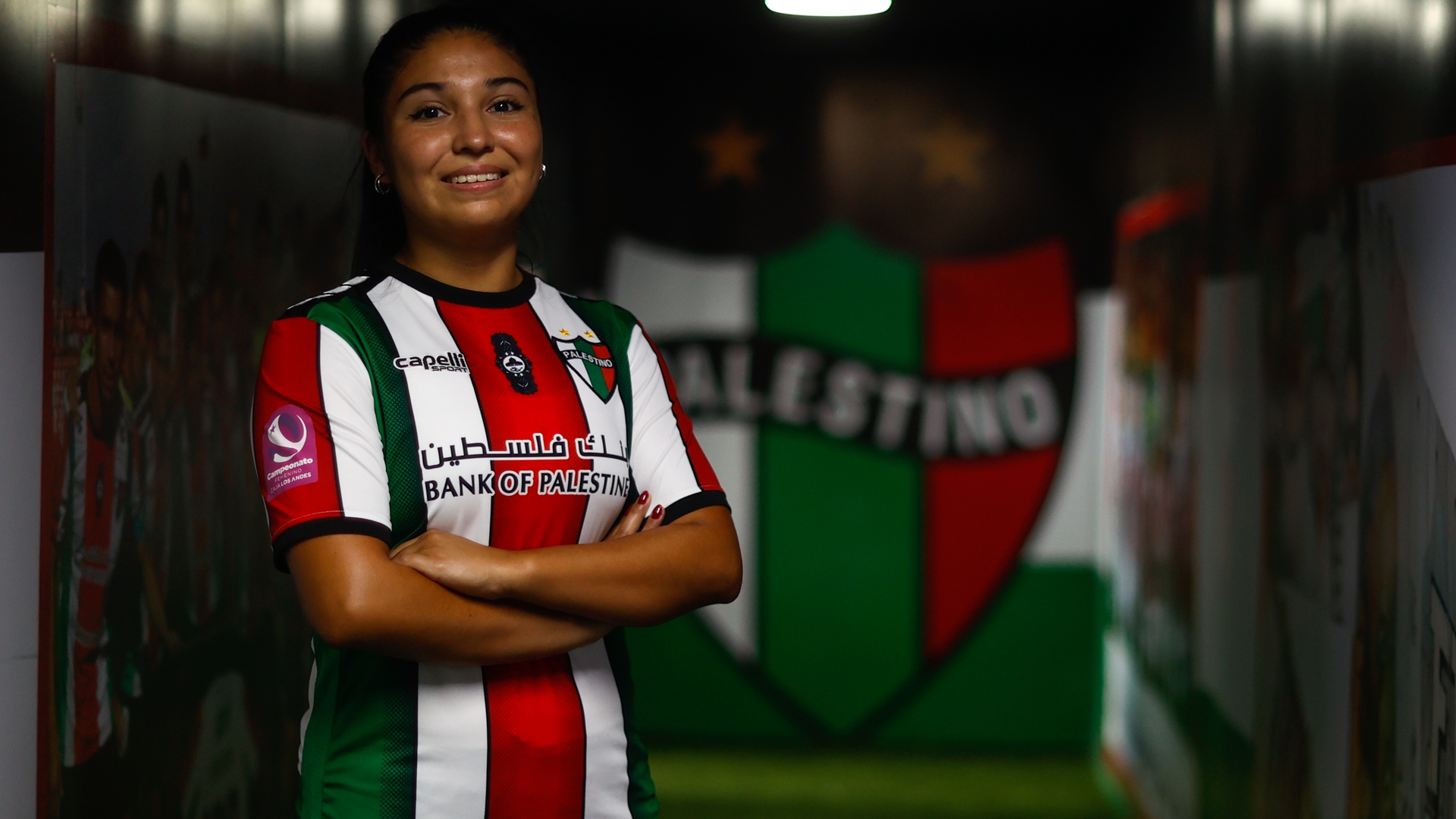
Palestino's home kit with its red, white, green and black colours. [palestino.cl]
This symbolism costed them a fine in 2014, when the number 1 used on the shirts was displayed shaped like Palestine's borders before the creation of Israel in 1948. Palestino had to pay around $1,300 as the map they used breached the ban on "political, religious, sexual, ethnic, social or racial discrimination", but the club doubled down on their social media profiles by claiming that "Palestine will always be historical Palestine, nothing less".
This controversial kit ended up being one of the most sold items from the club's shop in their history, attracting buyers from every continent.

Palestino's controversial kit, with the number 1 displayed as Palestine's pre-1948 borders. [uniceone.wordpress.com]
The club, as well as its fanbase, are internationally recognized for their stances towards the Palestinian struggles in the homeland. Despite the years that have passed since the foundation of the club, Palestino still holds a relation with the middle-eastern country: their matches are still regularly broadcasted by Al Jazeera.
In 2016 the club set up a friendly match in Santiago against Ahli Al-Khaleel, a club from the occupied West Bank and then champion of the Palestinian football league. In the same year they've travelled to Palestine to show the players, who are not of Palestinian descent anymore, the country which originated the club. Three more friendlies were played, including one in which the Palestinian National team defeated C.D. Palestino 3-0.
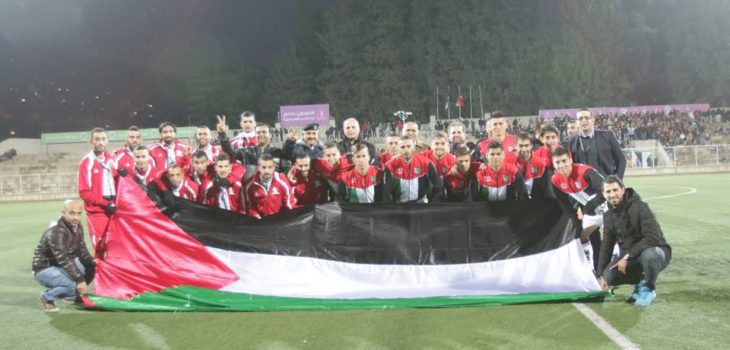
C.D. Palestino and the Palestinian National team prior to their friendly match. [biobiochile.cl]
Many clubs around the world have a diaspora background. In Santiago alone Palestino plays the Clasico de Colonias against fellow immigrant clubs Union Española and Audax Italiano. However, not many of those are still such a relevant part of their original country's culture: despite Palestino's players not having Palestinian DNA, people from the homeland still support the club, which is widely represented as Palestine's second National team.

Palestino's fans showcase a Palestinian flag. [doble-espacio.uchile.cl]
Nowadays the Palestinian situation is as tough as ever, and C.D. Palestino keep supporting the cause through symbolism, solidarity gestures, even financing football academies in Palestinian territories to grow local talent in the middle-eastern country which have sadly been paused in recent times for safety reasons.
Comments
Post a Comment