When on October 1st 2022 Arema FC fans were entering their home ground, Kanjuruhan Stadium, they never would have imagined how that evening would change their club, their lives and Indonesian football forever.
The match was massive: the Super East Java Derby against Persebaya Surabaya is one of the fiercest rivalries in Indonesia. The distance between Arema's city Malang and Surabaya is just a two hour drive, so supremacy over the East Java province and bragging rights are at stake.
Indonesia has had extensive problems with football hooliganism in the past: 95 deaths have happened in football-related incidents between 2005 and 2018. For this reason, authorities banned Persebaya fans from travelling to Malang, closing the away end.
 |
| Kanjuruhan Stadium in Malang, Indonesia [dreamstime.com] |
Concerned because of the buzz around the match, the police tried to move the game from the evening to the afternoon and to reduce the tickets available from 42,000 to 38,000, without success.
Arema went into the match strong of an unbeaten run in home derbies. Persebaya, on the other hand, had won three of the previous four fixtures.
Despite the match ending with a historic 2-3 away win for Persebaya, the game itself did not have tense moments and went by without any issue. After the full-time whistle, some Arema fans entered the pitch to cheer up and support the players despite the defeat.
According to a witness, the four men who entered the field were then chased and beaten by the police. This action sparked the reaction of many more Arema fans who then invaded the pitch themselves: according to reports, up to 3,000 of them entered the playing field in the aftermath of the match.
This time the invasion was not as peaceful. Many of the fans went looking for the club's players and officials to demand explanations for the defeat, generating chaos on the field.
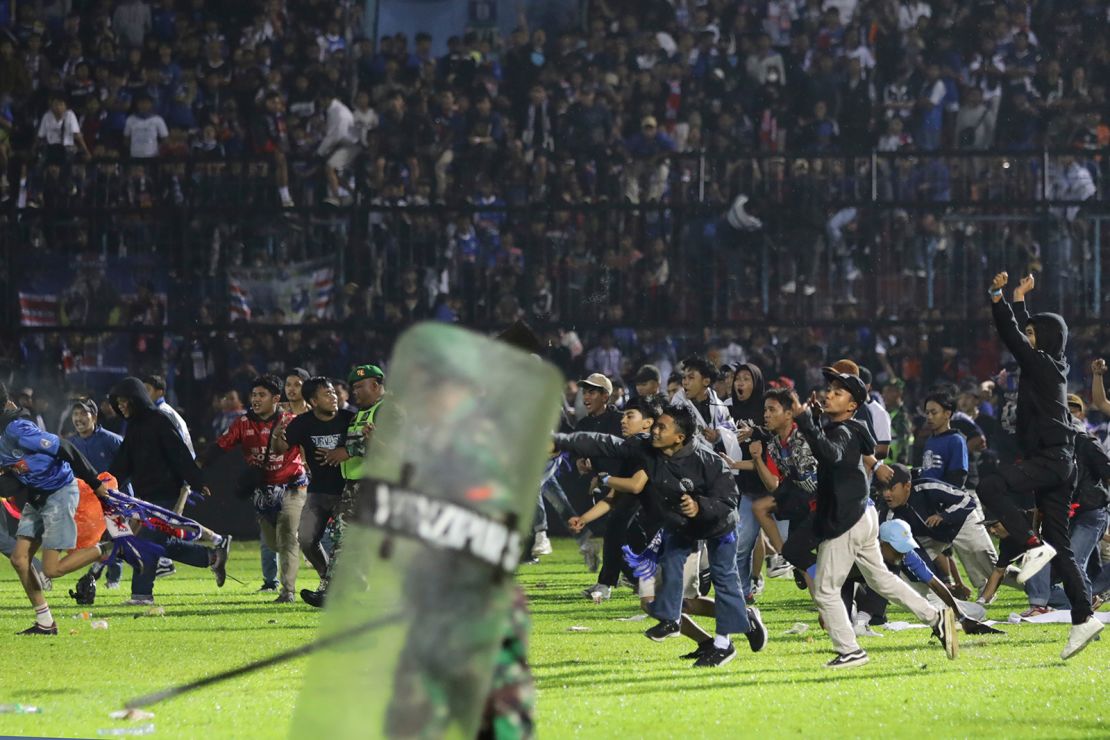 |
| Arema fans invade the pitch after the match against Persebaya Surabaya [cnn.com] |
As the situation developed, it looked harder and harder to disperse the fans. The police began firing tear gas cans - which are banned by FIFA regulations - towards the invading fans and towards the stands, causing a collective rush.
Both the fans still in the stands and the fans on the pitch started running towards the exits looking for a safe spot, but most of the gates were still closed.
The rush for the exit of thousands and thousands of fans at the same time resulted in a stampede. In total, 135 fans lost their lives, 38 of them were underage kids.
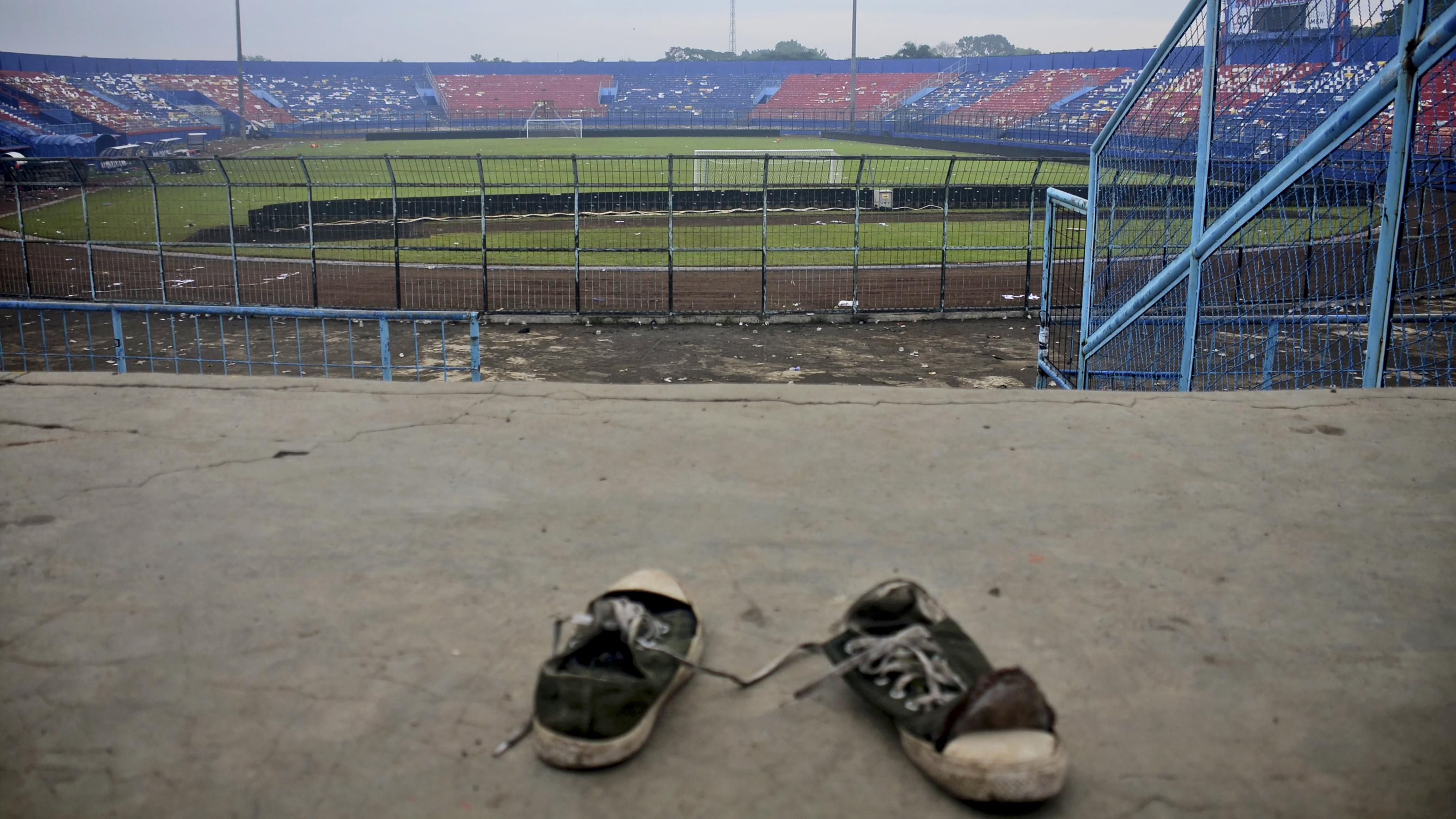 |
| The aftermath of the stampede at Kanjuruhan Stadium [photo: AP] |
The Indonesian football association (PSSI) suspended all professional leagues, and the Head of Indonesian Police removed the Head of Malang Police and nine officers from their duties.
An independent fact-checking team, composed of the Coordinating Minister for Political, Legal, and Security Affairs and the Minister of Youth and Sports, found six parties responsible for the incident: PSSI, LIB (the league), the match organizing committee, the match security, the police and the supporters.
An independent investigation by The Washington Post revealed that the police fired up to 40 tear gas cans, which were ultimately what caused the rush to the gates and, because of that, the victims.

The locations in which smoke bombs and tear gas cans were shot on the night of the disaster [Narasi Newsroom]
In late November, almost two months after the incident, the autopsies of two young girls involved in the disaster were published by the Indonesian Forensic Doctors Association. The report stated that the victims died due two bleeding and fractures to the ribs and chest, injuries typical of a stampede, and found no traces of tear gas. The victim's lawyer, however, claimed that when the two bodies were found in the disaster they had blackened faces, foam coming out of their mouths and were dripping urine, which would suggest that the girls were exposed to chemicals, and did not find any bruises.
Only six people were prosecuted for the disaster. Despite the amount of tear gas used, a presiding judge stated that "the wind is guilty for the fatalities", initially acquitting police officials Pranoto and Achmadi.
In August 2023 the initial verdicts were annulled, and the two officials sentenced to prison for two and a half years and two years respectively.
The leagues resumed two months later behind closed doors, and Indonesian president Widodo ordered the demolition and reconstruction of Kanjuruhan Stadium after a meeting with FIFA president Infantino. Arema FC, however, was banned from hosting matches in front of their fans, and had to move their home games 250 kms away from the city of Malang.
On May 11th 2025, over two and a half years after the last time, Arema played its first match in the rebuilt Kanjuruhan Stadium. Only 2,850 people attended the game. After the match, the away team's bus was pelted with stones, resulting in the final matchday at home against Semen Pedang being played without a crowd.
 |
| The rebuilt Kanjuruhan Stadium [ANTARA] |
The Kanjuruhan Stadium disaster robbed 135 people of their lives and an entire city of its joy. The feeling is that the football club, although it is still operating, has lost its soul with the victims of the tragedy.
Many fans in Malang now claim that their love for Arema has turned to suffering, and with the combination of what has happened and the club not even playing in the city for more than two years, a lot of them have become disillusioned with their fandom.
Such scars never really disappear. Maybe with time the city will be able to enjoy Arema again, but they will never forget the 135 brothers and sisters that they lost on that cursed evening.
Comments
Post a Comment