It's pretty common to have more than a club in a single city, especially if it's a National capital. For example, Belgrade has both Red Star and Partizan, Wien has Austria and Rapid and so on. However, a fight for domination over a city by two clubs who claim to be the same exact thing is a completely different story and much rarer.
That's exactly what is going on in Bucharest, the capital of Romania, where FCSB and CSA Steaua have been fighting for years, each claiming to be the righteous heir of Steaua Bucharest's historic sporting achievements, including their famous 1986 European Cup triumph.
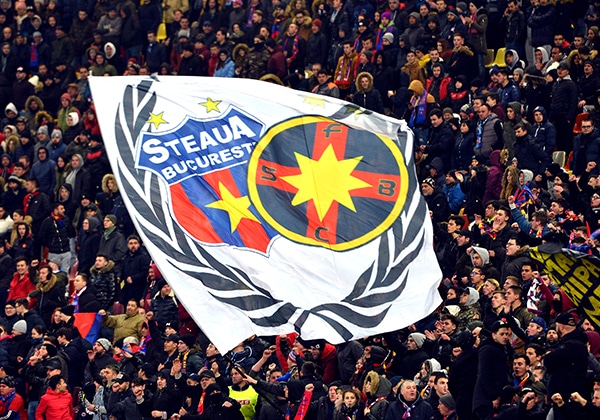 |
| FCSB fans displaying the historic badge of Steaua and FCSB's one [FCSB] |
The concept of two clubs arguing about which one is the real successor is a little hard to grasp, but it's not that uncommon in Eastern Europe. Something similar is going on in Bulgaria, where CSKA 1948 Sofia was founded by people breaking away from the original CSKA Sofia after their bankruptcy, and now both clubs compete in the first division.
Bucharest's case, however, is a little different, as Steaua never went bankrupt. The chaos started in the late 1990s: some years after the collapse of Ceaușescu's regime, the state stopped financing sports clubs. Steaua, which until then was the Romanian Army's club, was forced to find alternative founding to keep going.
 |
| Steaua players celebrate their 1986 triumph in the European Cup [Getty Images] |
To do so, a non-governmental organisation was founded as AFC Steaua, which was granted the right to use the name and the badge of the club. In the early 2000s, the club started borrowing money from George Becali, a businessman, politician and eventually convict, who in exchange was going to receive shares of the club.
Since Romanian law prohibited AFC Steaua from becoming a joint-stock company, FC Steaua București SA was founded with the intent of avoiding this limitation. Becali received 51% of the shares of this new company, and AFC Steaua another 36%, with the remaining shares going to other investors.
 |
| Every country has a George Becali, I guess. [NY Times] |
This new company asked CSA Steaua, the main multi-sports club run by the Ministry of Defence, for permission to use the badge and the name, but this request was denied. Becali & Co. decided to go on with the plan anyway, using Steaua's image regardless.
When in 2011 CSA Steaua sued the club, the High Court ruled that Becali had no right to use Steaua's name. By 2017, the club was forced to change its name to Fotbal Club FCSB, with the letters recalling the original denominations without properly naming Steaua.
 |
| A comparison between the original badge and the one FCSB are now forced to use |
In the same year, the Ministry of Defence decided to reactivate their football section, and so CSA Steaua joined the fourth tier for the 2017-18 season using the original badge and name. A court recognised them as the rightful owners of the club's history between 1947 and 1998, meaning they retain the European Cup title.
CSA Steaua however, being a publicly-owned club, is not allowed to compete in the Romanian top tier, the Liga 1. For this reason they are stuck in Liga II, where in the 2024-25 season they've finished in second place. It would have been good enough for promotion, but since they're ineligible their spot went to third placed Csikszereda.
/https%3A%2F%2Fwww.prosport.ro%2F%2Fwp-content%2Fuploads%2F2023%2F06%2FRasturnare-de-situatie-la-CSA-Steaua-Comandantul-e-aproape-sa-dea-marea-lovitura-si-sa-obtina-dreptul-de-promovare-in-Superliga-2-1400x933.jpg) |
| CSA Steaua players [prosport.ro] |
Since most of Steaua's titles have been recognised as CSA Steaua's, the now-called FCSB, still competing in the top tier and in European competitions, officially only have two national titles, won in 2024 and 2025. Even the multiple successes between 2003 and 2017 have been stripped from them, as there has been no legal acquisition to their rights.
This saga is obviously not over yet, as there are plenty of Romanian lawyers salivating at the thought of joining this fight for one or the other side.
Amidst all this legal mayhem, which club did Steaua fans end up supporting? The answer is not black and white, as both clubs have attracted different sets of fans. Hardcore Steaua ultras, for example, consider CSA Steaua the true continuation of the historic Steaua, arguing that having the original crest, name and history make them the real club. FCSB, which is often called "Becali's club" with a negative light, has attracted younger supporters and some glory-hunters, who see them as the real successor as they kept participating in the Liga 1 and the UEFA competitions over the years.
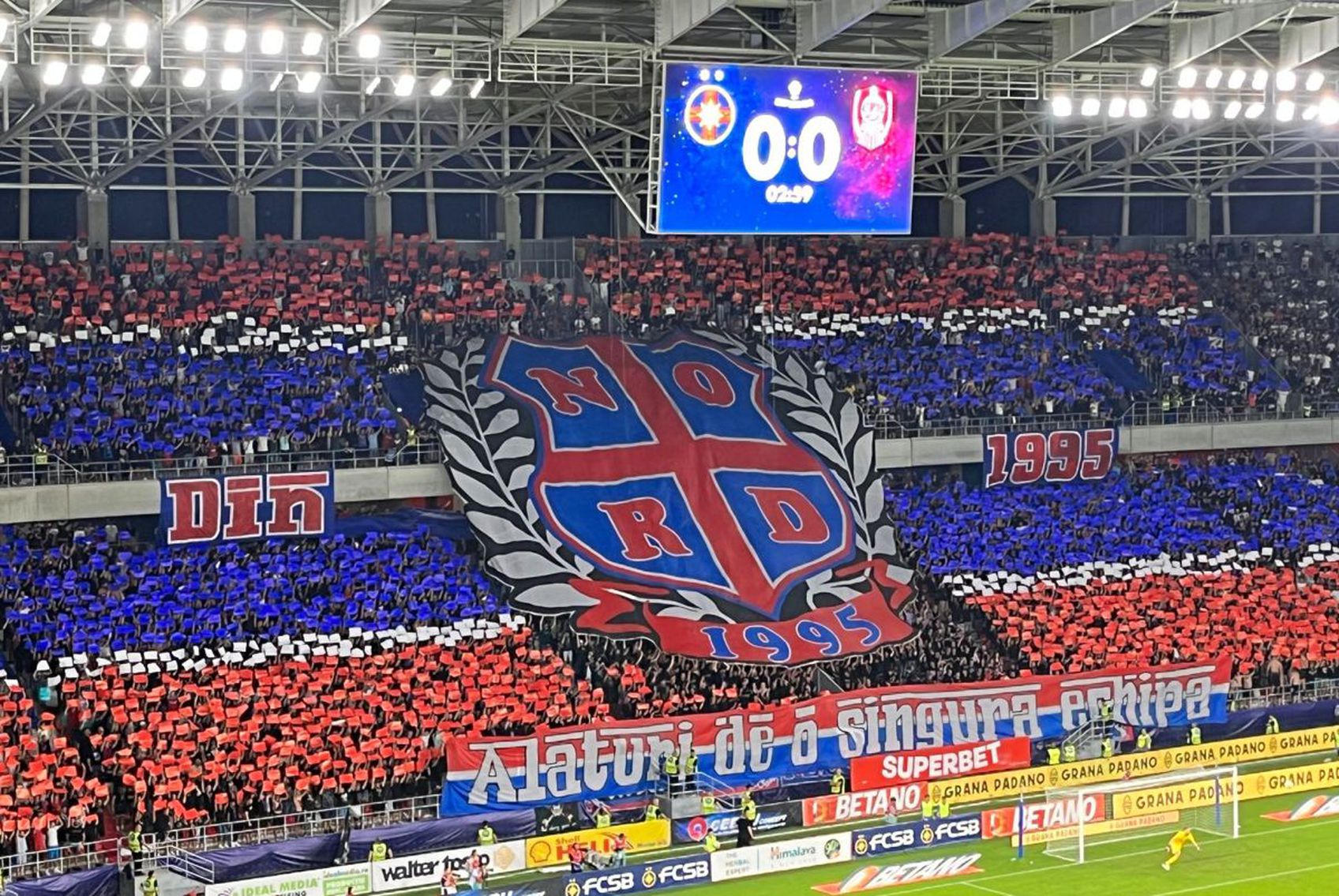 |
| The "Peluza Nord" (North Stand) filled with FCSB fans [gsp.ro] |
Analysing social media, FCSB seems to be clearly more popular (i.e. over 350 thousand Instagram followers vs CSA's 15 thousand), but this fact is heavily influenced by FCSB's presence in the top tier and in Europe, compared to CSA Steaua who are stuck in the second tier.
This effect is clearly present at the turnstiles too: CSA Steaua host on average around 1,600 supporters in their home matches, while FCSB had 14,800 on average in the 2023-24 season.
It would be interesting to see what would happened if CSA was allowed to be promoted and the two clubs could face each other, but at the moment this is destined to remain a question mark unless they somehow end up one against the other in the Romanian Cup in the near future.
Comments
Post a Comment